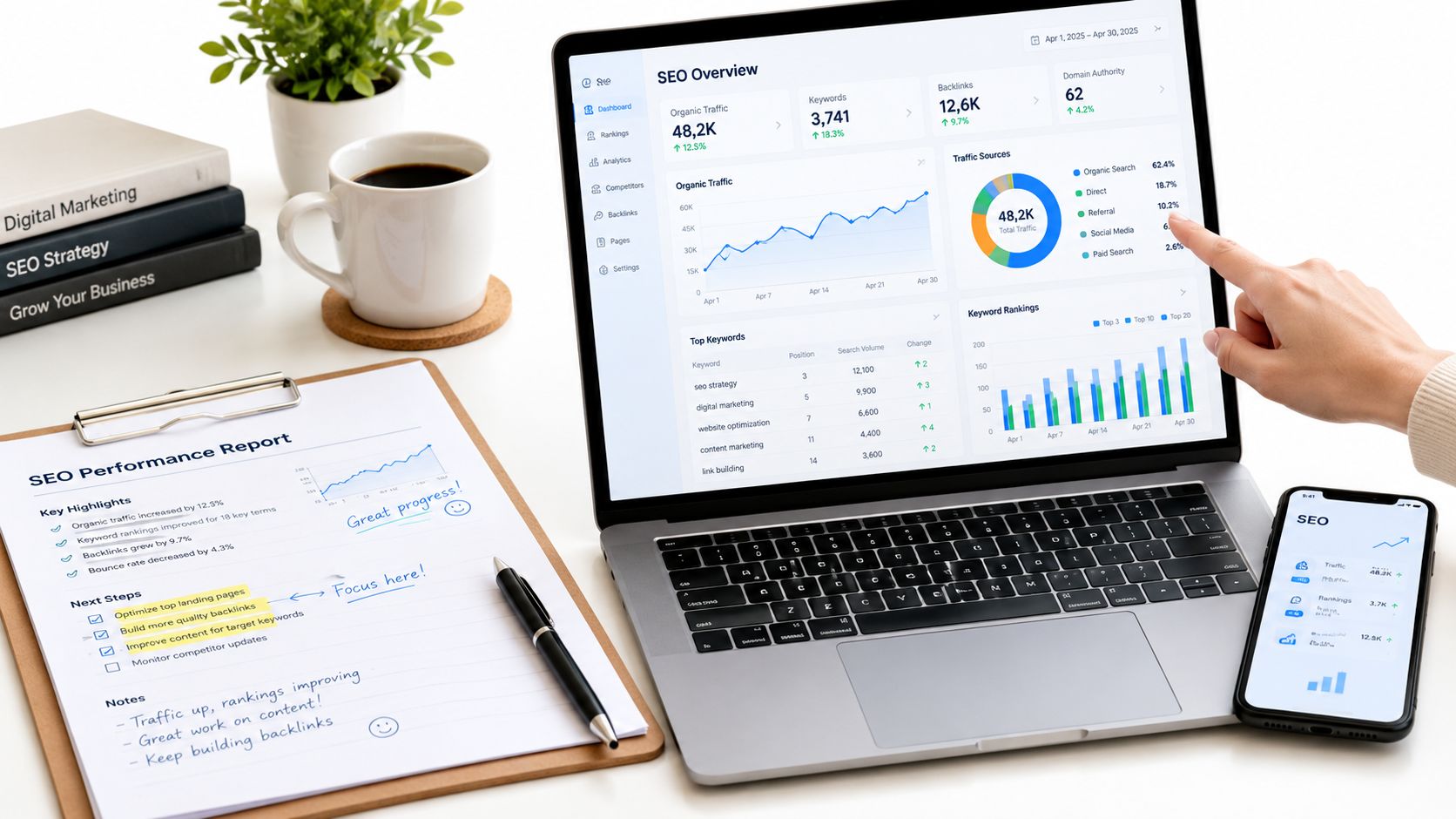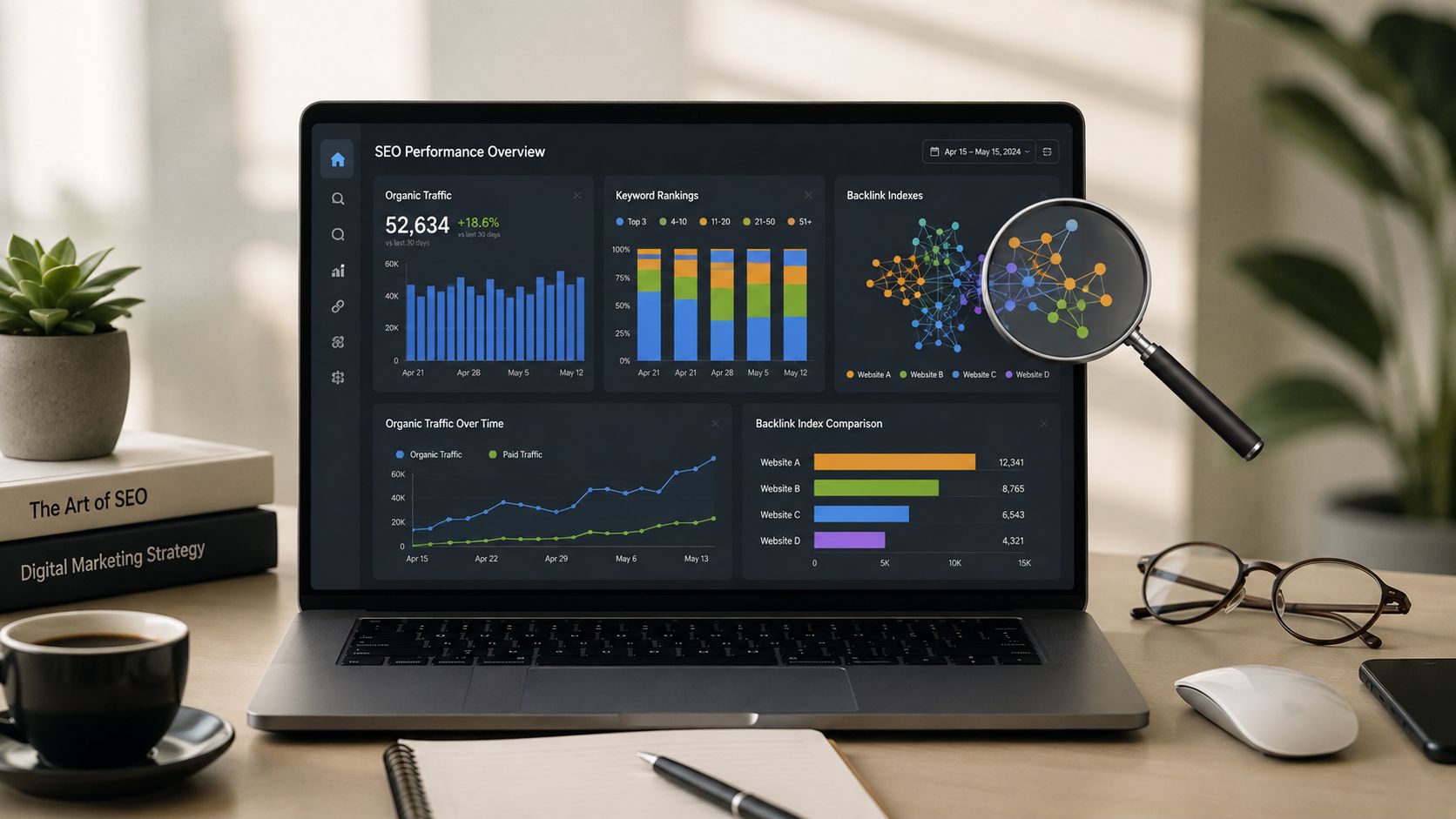
The biggest backlink index is not always the best choice. I've seen teams chase headline coverage, then miss the question, which is whether the tool helps them make better decisions about fresh link discovery, historical investigation, broad coverage, risk auditing, o cost-efficient workflows. A backlink index tool only earns its keep when it helps you answer who linked, when they linked, and whether that link is still worth acting on. Majestic's Historic Index has tracked backlink data since 6 June 2006 and, by 2024, covered the range from 06 Jun 2006 to 26 Mar 2024 with 4.502.566.935.407 URLs únicas rastreadas y 21,743,308,221,308 unique URLs found Majestic Historic Index. That scale matters, but scale alone doesn't tell you whether the tool fits your workflow.
When I compare these tools, I look at freshness, historical depth, referring-domain coverage, URL-level detail, export limits, and the exact job I need done. Competitor discovery needs a different index than link reclamation. Risk reviews need a different lens than content outreach. I also separate reported database size from practical coverage, because large numbers can hide stale graphs, weak revisit cadence, or poor visibility into the pages I need to audit.
The useful test is simple. I check the same domains across multiple tools, then I compare what each one can see, how quickly it updates, and how much of that data I can move into an outreach list or audit workflow. Xholic AI best tweets collection is a reminder that backlink talk gets noisy fast, so the cleaner path is to pick the index that supports the decision in front of you.
Tabla de contenido
- 1. SemDash
- 2. Ahrefs
- 3. Majestic
- 4. Semrush
- 5. Moz Link Explorer
- 6. SISTRIX
- 7. Serpstat
- 8. LinkResearchTools
- 9. SEO SpyGlass
- 10. SE Ranking
- Top 10 Backlink Index Tools Comparison
- Choose the Index That Matches the Decision
1. SemDash
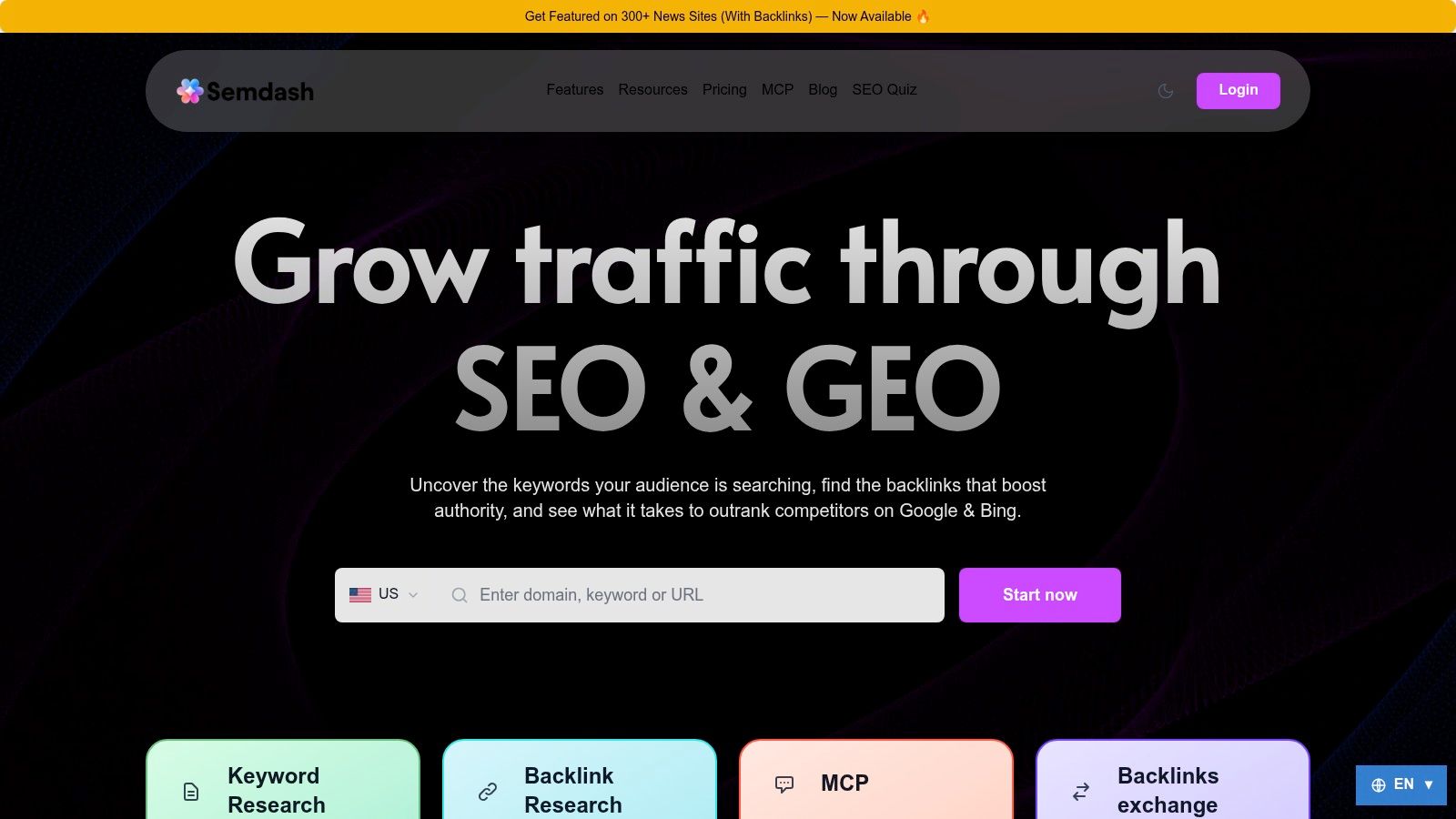
SemDash earns the featured spot because it treats backlink research as part of a wider competitive workflow, not as a siloed report. I like that when I'm mapping competitor pages, pulling backlink gaps, and trying to decide which opportunities are worth outreach effort. The platform's índice de 2.7 billones de enlaces, 6.6 mil millones de palabras clave de Google, y 600 millones de SERP actualizadas mensualmente make it useful when you need both link context and search context in the same place SemDash. It also gives you the kind of mapeo a nivel de URL that matters when you're trying to see which exact page ranks for a term instead of guessing at domain-level noise.
Why I'd use it in real work
The practical advantage is that SemDash helps me connect Brecha de backlinks, Anclajes, agrupación de palabras clave, y historial de SERP into one decision path. That makes it easier to go from “this competitor has links” to “these are the pages, terms, and anchors I should target next.” Its AI-assisted content briefs and intent classification are useful when the backlink work is tied to content production rather than just cleanup.
Regla práctica: if the backlink project needs to end in content briefs, outreach targets, or competitor reverse-engineering, I'd rather work in one tool than juggle separate exports.
SemDash also fits teams that want a lighter operational lift. The learning resources, live calls, and public roadmap make it easier to adopt without a long ramp, and the product's positioning around affordability is attractive for consultants and agencies that don't want enterprise overhead. The trade-off is that some deep enterprise-style workflows may not feel as mature as the legacy incumbents, so I'd treat it as a high-value operating layer rather than a pure archival specialist.
2. Ahrefs
A new placement is usually the first thing I want to verify, then I check whether it stuck. Ahrefs earns its place through how quickly it surfaces actionable data. Ahrefs says its backlink index is updated every 15 minutes, which makes it useful for fresh discovery, link-gap work, and spotting whether a recent mention has been indexed yet Ahrefs. If I am tracking a campaign launch, reclaiming lost links, or checking a live placement, that speed is more useful than a bigger index count on its own.
Link Intersect is the feature I use most often for outreach planning. It shows which domains link to competitors but not to me, so the output is already filtered for action instead of padded with general research noise. Site Explorer, anchor reporting, and historical views fill in the rest when I need to see whether a profile is growing cleanly or just accumulating low-value links.
For a side-by-side view of how Ahrefs compares with Majestic on fresh discovery versus historical depth, SemDash's Ahrefs vs Majestic breakdown is a useful reference.
I pick Ahrefs when I need to move from discovery to outreach quickly.
The trade-off is cost and plan limits. Ahrefs can feel expensive, and first-time users sometimes underestimate how far credits or limits will stretch across repeated checks. Even so, it is one of the cleanest tools for fast competitive review, especially when the goal is to see what changed recently and decide what deserves attention now.
3. Majestic
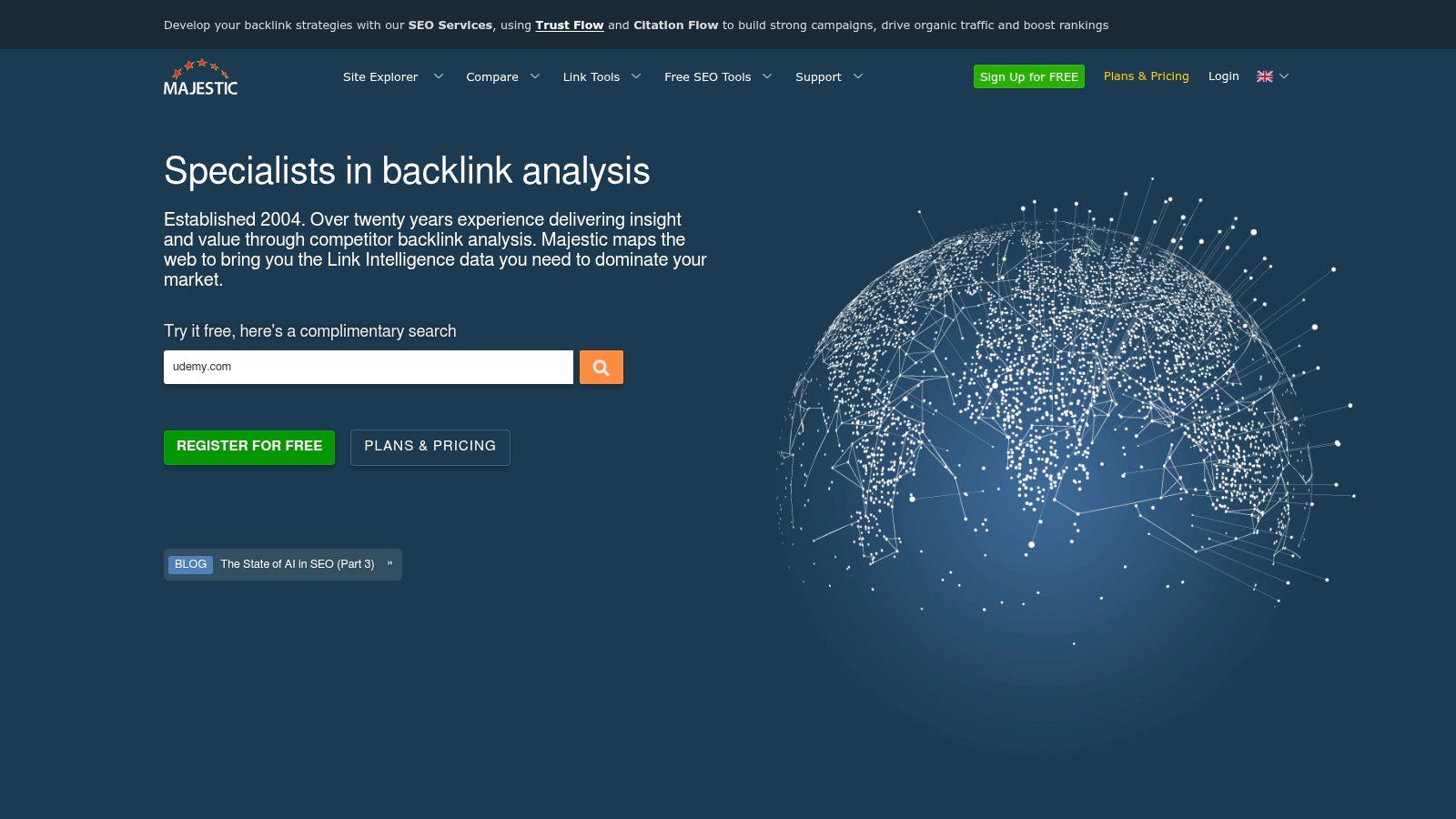
Majestic is the tool I trust when the question isn't just “what links exist now,” but “what has this domain looked like over time?” That's where its Fresh Index y Historic Index matter. Majestic notes that its Fresh Index started as a 30-day view, then expanded to 120 days, while its Historic Index now spans more than 15 years of backlink history Majestic company history. For audits, migrations, and old-domain investigations, that long memory is often more useful than another layer of surface-level coverage.
Where Majestic wins
I've found Majestic strongest when I need to explain link context, not just count links. Trust Flow, Citation Flow, Topical Trust Flow, y Link Context help me separate meaningful patterns from generic backlink volume. If I'm comparing a client's domain to a competitor that has been around for years, the historical layer often reveals old authority signals, lost link clusters, or suspicious spikes that a fresh-only tool won't make obvious.
The trade-off is that Majestic feels more technical. That isn't a flaw, it's just the cost of getting a dedicated link intelligence workflow. If you want a broad SEO suite with lots of keyword features, you may feel constrained here. If you want a serious historical backlink instrument, it's hard to beat.
4. Semrush
Semrush is the broad suite I use when backlink analysis has to sit beside cleanup, keyword research, and general SEO operations. Its Backlink Audit workflow is the main reason. It flags potentially toxic links with multiple markers and a Toxicity Score, which makes it useful as a triage layer when a profile needs human review before any disavow or cleanup decision Semrush. I don't treat that score as a verdict, I treat it as a sorting mechanism.
That distinction matters. A backlink index tool can surface risk patterns, but it can't know the full business context behind every link. A directory link might look noisy in one niche and completely normal in another. Semrush gives me a structured way to sort, but I still review the underlying pages, anchors, and referring patterns before I act.
Best fit and limitation
Semrush works best when the backlink task is part of a larger campaign. I like the integrations with Google Search Console y Google Analytics because they help connect link cleanup with actual site performance. That makes it easier to defend decisions internally, especially when the work touches a client's brand or a recovery campaign.
The limitation is the same one I see across any automated audit flow. The score helps me move faster, but it doesn't replace judgment. If you use it as a final answer instead of a review queue, you'll end up over-pruning or under-pruning. Use it to narrow the list, then inspect the pages yourself.
5. Moz Link Explorer
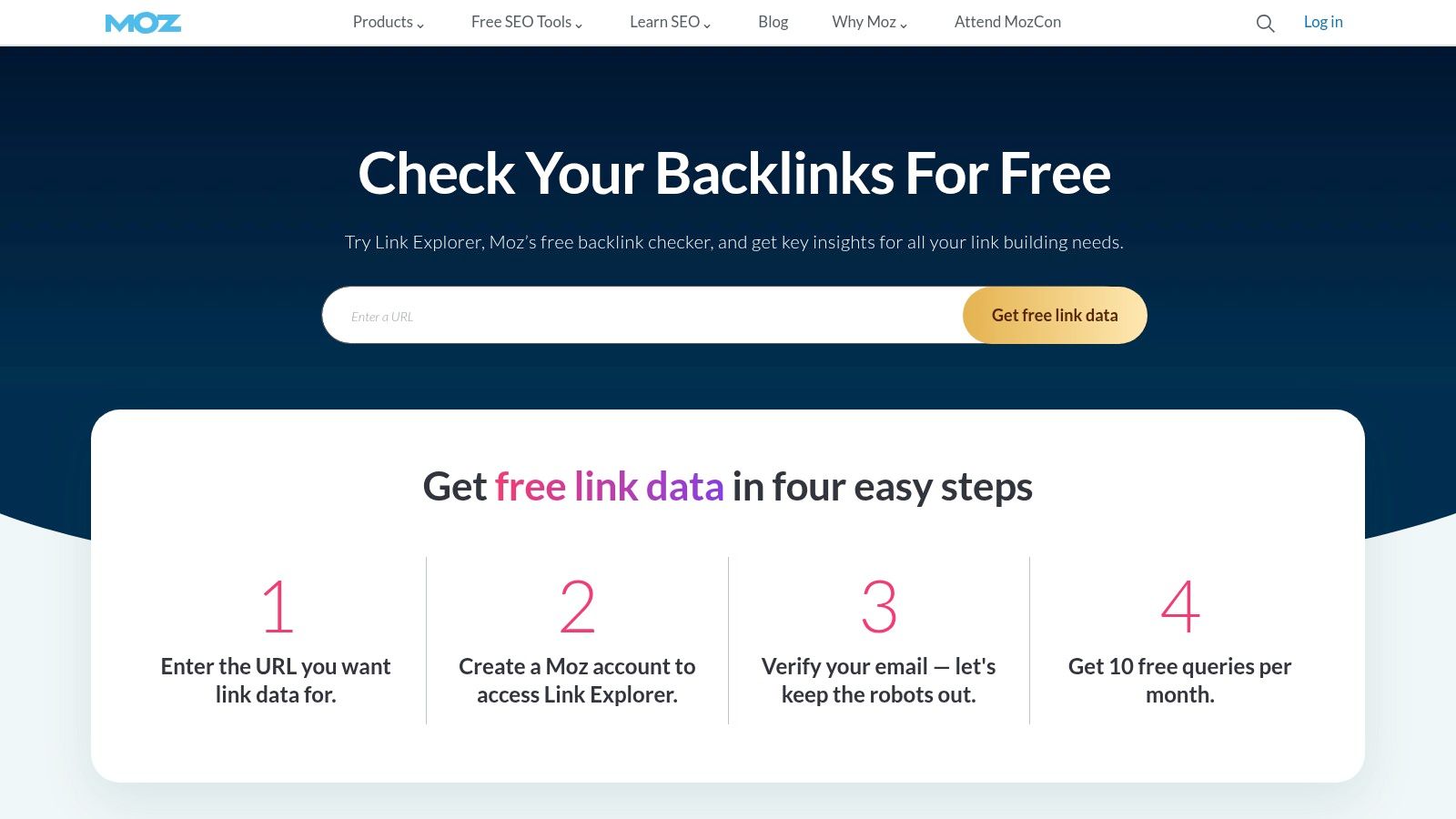
Moz Link Explorer is the one I recommend when someone wants a friendlier backlink workflow and doesn't need the deepest crawler on the market. It's straightforward to read, easy to explain to non-specialists, and built around familiar metrics like Autoridad de Dominio, Page Authority, y Spam Score Moz Link Explorer. That makes it useful for quick comparisons, especially when the audience cares more about relative quality than about every historical nuance.
Why it still has a place
I like Moz for outreach prep and light audits. The inbound links, dominios enlazados, páginas principales, y anchors views are simple enough that junior teammates can use them without much training. If I'm putting together an initial prospecting pass, that simplicity saves time.
Mi regla general: use Moz when clarity is more important than exhaustiveness.
The limitation is coverage. In deeper investigations, I usually pair Moz with a second source because smaller or less fresh indexes can miss links that matter in competitive niches. I'd never use it as my only source for a high-stakes recovery or competitive analysis, but I do like it as a clean, accessible second opinion. If you want a practical explainer on how link tools fit together, this backlink analysis software guide is a useful companion.
6. SISTRIX
SISTRIX makes sense when backlink research is only one part of a broader visibility workflow. Its Backlink module is augmented with Majestic data inside a Backlink-Index, and that matters because you're not just getting isolated link reporting, you're getting link analysis tied into visibility and SERP context SISTRIX. I find that useful when I need to explain whether a backlink pattern lines up with ranking changes or whether a visibility drop has another cause entirely.
The project-based monitoring is the part I'd use day to day. It gives me a stable place to track a domain over time, which is helpful when I'm watching a market, not just auditing a single URL. The LinkRating metric gives an additional layer of qualification, so the workflow is less about volume and more about whether the link is worth caring about.
Mejor caso de uso
SISTRIX fits teams with a heavy reporting habit, especially when backlink data has to live alongside keyword and visibility work. That's valuable in agencies where one analyst owns links and another owns rankings, because the shared context keeps both sides from working in separate spreadsheets.
The trade-off is cost structure and regional fit. Euro billing can be awkward for some buyers, and the backlink depth may still trail the single-purpose crawlers in certain niches. If you want a clean balance between backlinks and wider SEO visibility, it's a strong option. If you want the deepest possible standalone crawl, I'd still compare it against a dedicated index first.
7. Serpstat
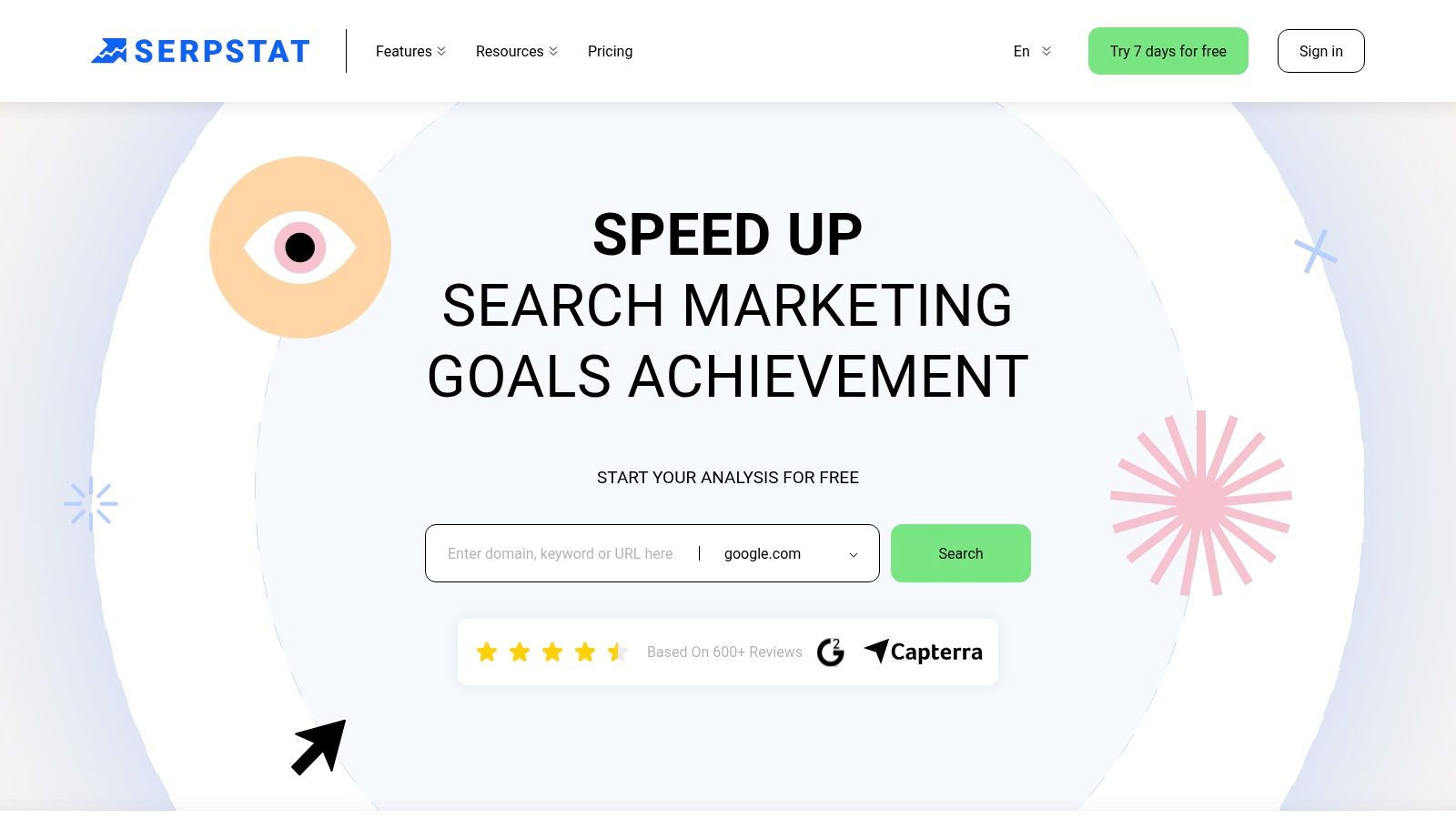
Serpstat is the value play I'd test when I need a broad SEO suite without paying for the heaviest crawler in the market. Its backlink dashboard covers new and lost links, referring domains/pages, anchors, y link intersect, which gives me enough structure to handle most routine outreach and cleanup tasks Serpstat. For many teams, that's the sweet spot, because the work is practical rather than forensic.
Para qué lo usaría
I like Serpstat for batch analysis and exports. If I need a workable outreach list fast, I don't want a tool that makes simple reporting feel like an enterprise data project. The Backlinks API on higher tiers is another plus for teams that want to move data into internal systems without overengineering the workflow.
The limitation is that Serpstat leans toward recency, not deep historical archaeology. That's fine if your work is campaign-led or growth-led. It's not ideal if you're trying to reconstruct years of link history. I'd use it as a practical all-rounder, especially for teams that care about cost and breadth more than exhaustive archival detail.
8. LinkResearchTools
LinkResearchTools is the specialist I'd bring in when the backlink question has shifted from “what did we get?” to “what is this profile doing to us?” It's built for link risk analysis, penalty recovery, and negative-SEO style investigations, so the tool feels purpose-built rather than generalized LinkResearchTools. Its LRT Power*Trust scoring and DTOXRISK metric give me a structured way to triage the most suspicious parts of a profile before I make remediation decisions.
That's a different job from ordinary backlink discovery. When I'm dealing with a site that has thin anchors, weird clusters, or legacy spam, I care less about raw breadth and more about whether the tool helps me understand risk patterns quickly. The Smart Link Detox workflow and issue detection features are useful because they turn a mess into a sequence of decisions.
If a backlink index tool can't help you explain risk to a stakeholder, it's only half useful in an audit.
The downside is obvious. It's premium, often quote-driven, and the learning curve is steeper than the mainstream suites. I wouldn't recommend it for casual backlink checking. I would recommend it when the site is high stakes and the audit has consequences.
9. SEO SpyGlass
SEO SpyGlass is the one I'd pick when I want local control, offline work, and a more ownership-friendly licensing model. It's a desktop backlink analyzer, so the workflow feels different from browser-based SaaS tools right away. I like it for export-heavy audits, especially when I need to combine the tool's own link data with imports from Google Search Console, Google Analytics, or other external sources SEO SpyGlass.
The desktop model is a real advantage for long sessions. If I'm cleaning a large set of links, building reporting packs, or working in a place where cloud access is annoying, local processing can be simpler. It also gives you a more persistent ownership model than a subscription that resets around team seats and usage caps.
Dónde encaja mejor
I'd use SEO SpyGlass for cost-conscious teams that still want serious backlink exports. The link history charts y competitor link-gap analysis are enough to support practical research, and the offline capability helps when the workflow is document-heavy.
The trade-off is that local tools depend on your hardware and update habits. If you don't schedule updates, freshness suffers. If your machine is underpowered, large exports become cumbersome. It's a good fit for disciplined operators, less so for teams that want everything synced and always live.
10. SE Ranking
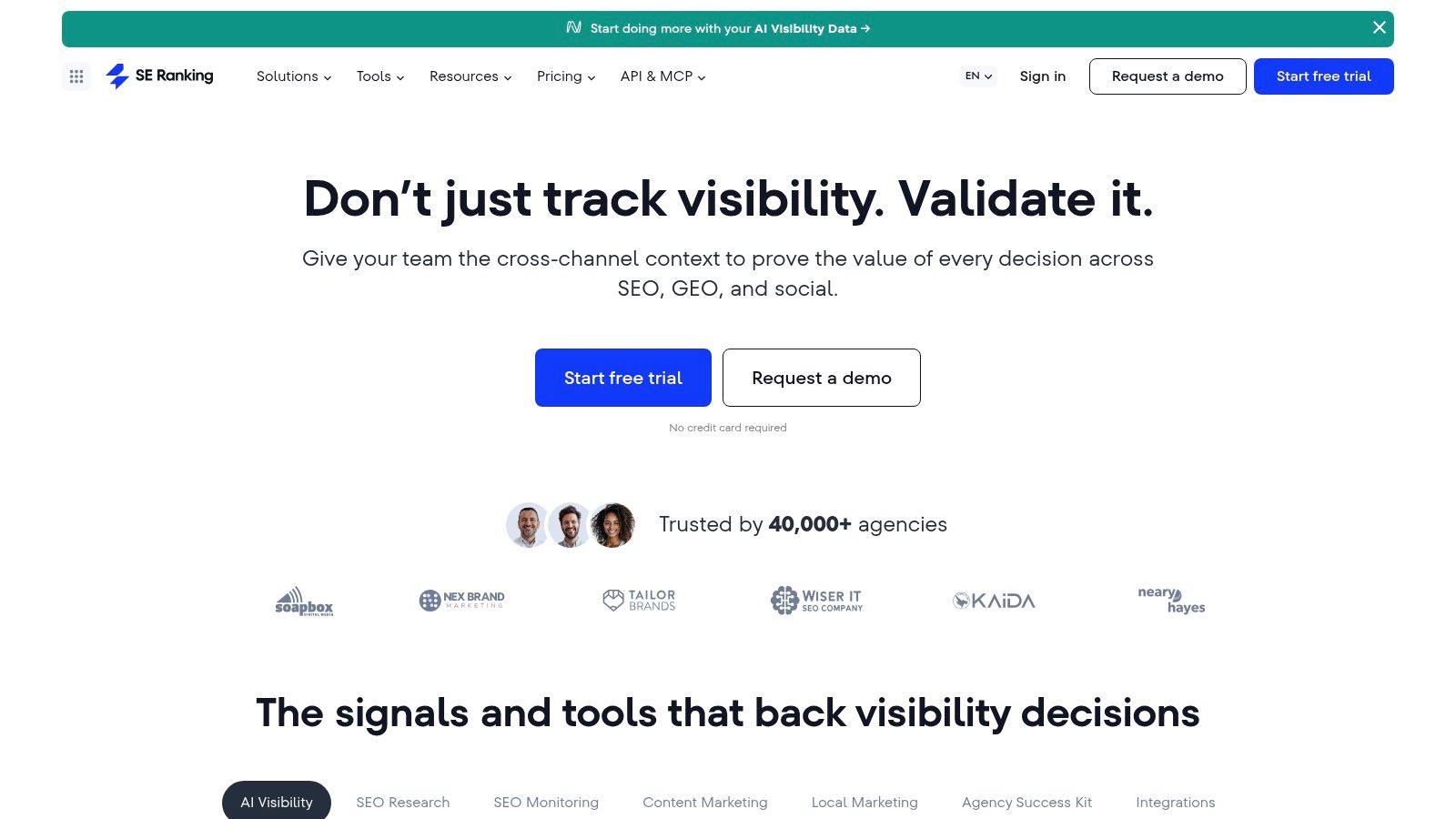
SE Ranking is the all-in-one option I'd consider when backlink analysis needs to live beside rank tracking and site audit work. Its backlink corpus is reported at around 2.7T links across ~420M domains, and it says it crawls 6 billion pages daily Clasificación SE. That kind of scale makes it a credible choice for teams that want a broader SEO platform without fragmenting their workflow across multiple vendors.
The practical value is in the reporting. New/lost backlinks, referring-domain growth, y link-gap research are easy enough to use for routine campaign monitoring, and the suite design makes it simple to move from backlink analysis into rank tracking or site audit without switching systems. That helps smaller teams more than it helps specialists, which is exactly why the product is attractive.
Qué ver
I'd still verify current plan limits before committing, because pricing and plan names were reworked in 2026. That kind of change can affect exports, API use, and how much backlink work you can do each month. If you're comparing it against a dedicated index, test the same domains in both tools and see whether the coverage feels good enough for your reporting needs.
For teams that want one platform for backlinks, rankings, and audits, SE Ranking is a sensible middle ground. For pure backlink intelligence, I'd still put a specialist index ahead of it.
Top 10 Backlink Index Tools Comparison
| Herramienta | Core strength (★) | Data scale & freshness | Propuestas de valor únicas (✨) | Target audience & value (👥💰) |
|---|---|---|---|---|
| SemDash 🏆 | Reliable, fast insights ★★★★★ | 6.6B kws • 2.7T links • 600M SERPs • frequent refresh | ✨ URL-level mapping, AI-assisted briefs, AI Overviews, Backlink/Keyword Gap | 👥 SEO consultants, agencies, content teams • 💰Value-friendly, free trial |
| Ahrefs | Live, extensive backlink coverage ★★★★★ | Very fresh live links (15–30m) • large crawler | ✨ Link Intersect, DR/UR metrics, API access | 👥 Link-focused teams • 💰Premium |
| Majestic | Deep historical backlink context ★★★★☆ | Fresh + Historic indexes (15+ years) • frequent Fresh updates | ✨ Trust Flow/Citation Flow, Index Merger | 👥 Researchers, audit pros • 💰Mid–high |
| Semrush | All-in-one SEO + backlink audit ★★★★ | Very large index • regular updates | ✨ Backlink Audit (Toxicity), GSC/GA integrations | 👥 Agencies & marketing teams • 💰Mid–high |
| Moz Link Explorer | Beginner-friendly backlink metrics ★★★★ | Smaller, less fresh index vs top crawlers | ✨ DA/PA, Spam Score, outreach lists | 👥 Beginners & SMBs • 💰Budget-friendly, free tier |
| SISTRIX | EU-focused visibility + backlink mix ★★★★ | Aggregates Majestic & partners • project history | ✨ LinkRating + tight SERP/visibility integration | 👥 EU agencies/enterprises • 💰Euro billing |
| Serpstat | Value-oriented all-in-one SEO ★★★ | Growing backlink index • favors recency | ✨ New/Lost links, batch exports, API (Team+) | 👥 Small teams/SMBs • 💰Value pricing |
| LinkResearchTools (LRT) | Link risk & penalty recovery ★★★★ | Proprietary risk-focused index • forensic history | ✨ DTOXRISK, Power*Trust, automated remediation | 👥 Enterprises & high-stakes audits • 💰Premium (quote) |
| SEO SpyGlass | Desktop/offline export-focused tool ★★★ | Reported 2.7T+ backlinks • local/offline workflows | ✨ One-time/annual license, heavy exports, GSC/GA imports | 👥 Consultants needing offline exports • 💰Cost-efficient licensing |
| Clasificación SE | Integrated rank tracking + backlinks ★★★ | ~2.7T links across ~420M domains • daily crawls | ✨ Rank tracking + backlink reporting in one suite | 👥 Small agencies/teams • 💰Good value |
Choose the Index That Matches the Decision
The best backlink index tool is the one that matches the decision you're making. If I need fresh competitive discovery, I lean toward Ahrefs o SemDash because both are built to surface recent movement and turn it into outreach or content action. If I need historical context, Majestic is the cleanest fit because its Fresh and Historic indices let me compare current links with long-range patterns. If I need forensic risk work, LinkResearchTools gives me the most specialized remediation and risk vocabulary. If I need backlinks to sit beside keywords, audits, or broader reporting, a fuller suite like Semrush, SISTRIX, Serpstat, o Clasificación SE can be more efficient than stitching together separate tools.
The mistake I see most often is buying by headline size alone. A giant index can still be the wrong source if it updates too slowly for your workflow, hides the exact URLs you need, or makes exports painful. I'd rather compare the same domains across two or three shortlisted tools, then measure freshness, referring-domain coverage, URL-level detail, and whether the tool exposes the links I can act on. That gives you a real answer, not a marketing number.
I'd also document the chosen source and its limits. If your reporting is built on one index for competitive discovery and another for historical auditing, say that out loud so nobody assumes the two are interchangeable. When teams do that work properly, link reclamation gets cleaner, outreach gets sharper, and audits stop drifting into opinion.
If you're still comparing data sources, compare SERP APIs and pricing alongside your backlink stack. The broader point is the same, pick the index that supports the workflow you run, not the one with the loudest database claim.
SemDash pulls backlink research, keyword data, and SERPs into one workflow, which is exactly why it fits this topic so well. If you want a backlink index tool that helps with competitor discovery, gap analysis, and content planning in the same place, visit SemDash and see how it handles the work.