
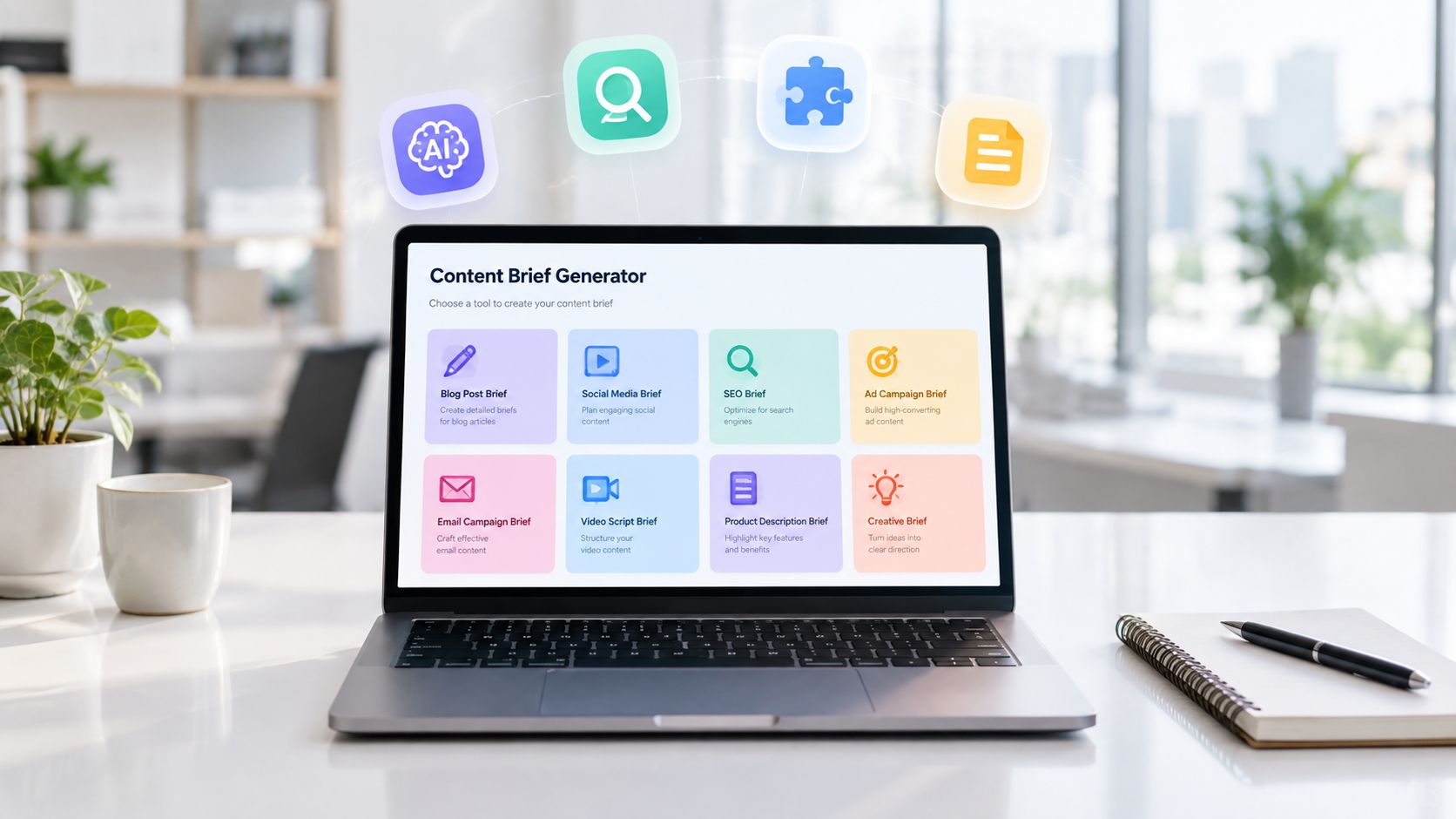
A content brief generator isn't automatically useful because it produces headings, related keywords, and a suggested word count. I've seen attractive briefs fail because they misread the SERP, merge several intents into one page, or give writers recommendations they can't apply without rebuilding the strategy.
I judge these tools by the workflow decision they solve. Does the platform interpret live ranking pages accurately? Does it distinguish informational, commercial, transactional, and navigational intent? Can it create a brief with enough depth for a competitive topic, support a reusable template, fit into the team's existing tools, and reach a writer without unnecessary handoff friction?
My practical test is simple. I choose a target query, inspect the ranking pages and their intent, generate a brief, then ask whether a writer can act on it without starting the research again. I also check whether the brief maps one keyword cluster to one URL, identifies useful gaps, and sets a clear conversion action. That matters as content becomes longer and more competitive. Industry compilations report an average blog post length of 1,333 words in 2025, while page-one results averaged about 1.447 palabras and top-ranking pages often clustered around 1,890 words (estadísticas SEO de contenido).
SemDash is especially relevant when keyword research, competitor analysis, historical SERPs, clustering, and AI-assisted briefs need to work together instead of living in separate tabs.
Tabla de contenido
- 1. SemDash
- 2. Surfer
- 3. Clearscope
- 4. MarketMuse
- 5. Frase
- 6. Semrush
- 7. Content Harmony
- 8. Outranking
- 9. SE Ranking
- 10. Keyword Insights
- Top 10 Content Brief Generators: Feature Comparison
- Choose the Workflow You Can Actually Run
1. SemDash
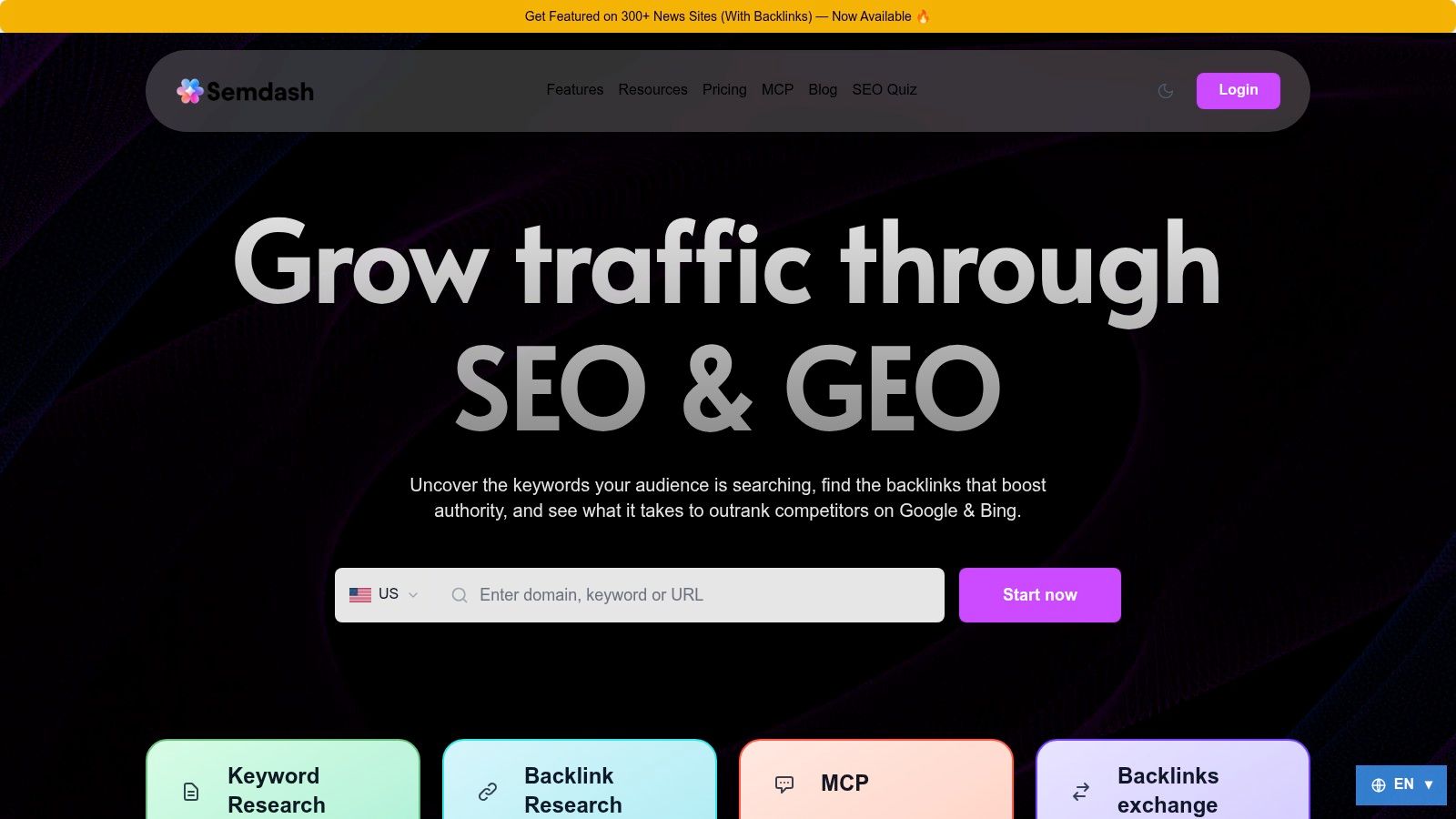
SemDash is the strongest choice when a brief must begin with SEO evidence rather than a topic idea. I can move from competitor domains and keyword gaps to URL-level ranking pages, SERP history, intent classification, clustering, and an AI-assisted brief without breaking the research chain. That makes a difference when the question is not “What headings should we add?” but “Which page should exist, what should it target, and why would it deserve to rank?”
The platform's scale supports that broader workflow. SemDash reports 6.6 billion Google keywords updated monthly, una índice de 2.7 billones de enlaces, y 600 million SERPs refreshed each month (SemDash SEO platform). Those figures matter because URL-level mapping lets me see the exact page ranking for a query, rather than assuming the competitor's homepage is responsible for its visibility.
Where SemDash earns its place
The content brief workflow benefits from several connected inputs:
- SERP interpretation: Review current results and Historial de SERP de 12 meses to detect volatility and changing intent.
- Cluster planning: Group related queries into page-level topics so supporting content doesn't compete with the primary URL.
- Competitive reverse-engineering: Use top pages, traffic share, domain keywords, and keyword-gap reports to find realistic content opportunities.
- Answer visibility: Check AI Overviews to identify queries that trigger Google mentions and the exact URLs cited.
- Authority planning: Combine content research with backlink gaps, unlinked mentions, and broken-link recovery.
The main trade-off is coverage depth for very large enterprises. Some users report smaller keyword pulls than Ahrefs in particular comparisons, and bulk multi-domain workflows may feel less developed than in enterprise incumbents. Pricing details also require checking the current SemDash site, although the platform promotes a free trial and free tools.
Regla práctica: Use SemDash to decide whether a page should be written before asking AI to outline it.
For agencies, SaaS teams, e-commerce marketers, consultants, and solo SEOs, that combination is unusually practical. Its MCP integration can also let Claude or ChatGPT query live SemDash SEO data, while multilingual interfaces and learning resources lower the onboarding burden. I'd shortlist it when the brief needs to connect keyword choice, page targeting, SERP evidence, clustering, AI visibility, and link acquisition in one workspace.
2. Surfer
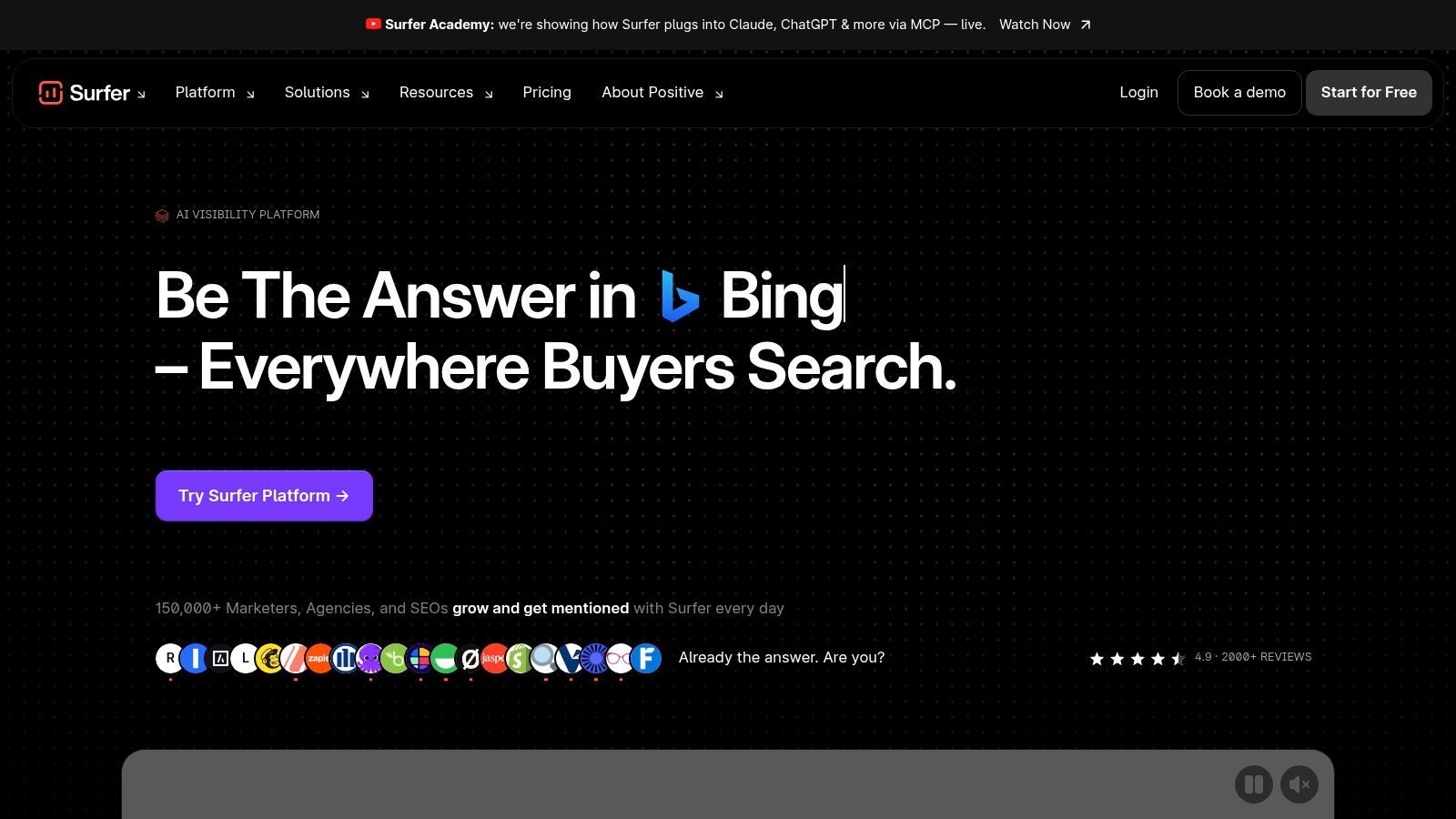
Surfer is built for teams that want the brief and the writer's optimization workspace to feel like one product. Its Content Editor analyzes live SERPs and turns the findings into headings, entities, questions, competitor examples, and content guidance. The “Smarter Outlines” workflow is particularly useful when a strategist wants to hand over something closer to a ready-to-write document than a research memo.
I find Surfer most effective when the team already agrees on the target URL and search intent. The writer can move from outline to draft while seeing content-score and NLP entity coverage feedback in the same environment. That reduces the common handoff problem where a writer receives a brief in one tool, drafts in another, and only discovers optimization requirements during editorial review.
The trade-off is operational clarity
Surfer's strengths are tightly connected to execution:
- Writer usability: Recommendations appear beside the draft instead of being buried in a separate brief.
- SERP evidence: Competitor headings and examples help reveal the format and coverage expected by ranking pages.
- Workflow continuity: Surfer AI and Topical Map integrations connect outlining with drafting and broader topical planning.
The weakness appears when a high-volume team treats every recommendation as mandatory. Word counts and entity suggestions are useful signals, not a substitute for editorial judgment. Plan and credit limits can also constrain large publishing operations, and the pricing tiers need careful verification before procurement.
I'd use Surfer when the key decision is how to make a writer's draft more aligned with the live SERP. I'd use a broader research platform first when the harder question is whether several similar queries belong on one page or across a cluster. For a wider comparison of research workflows, this content research tools guide is a useful companion.
3. Clearscope
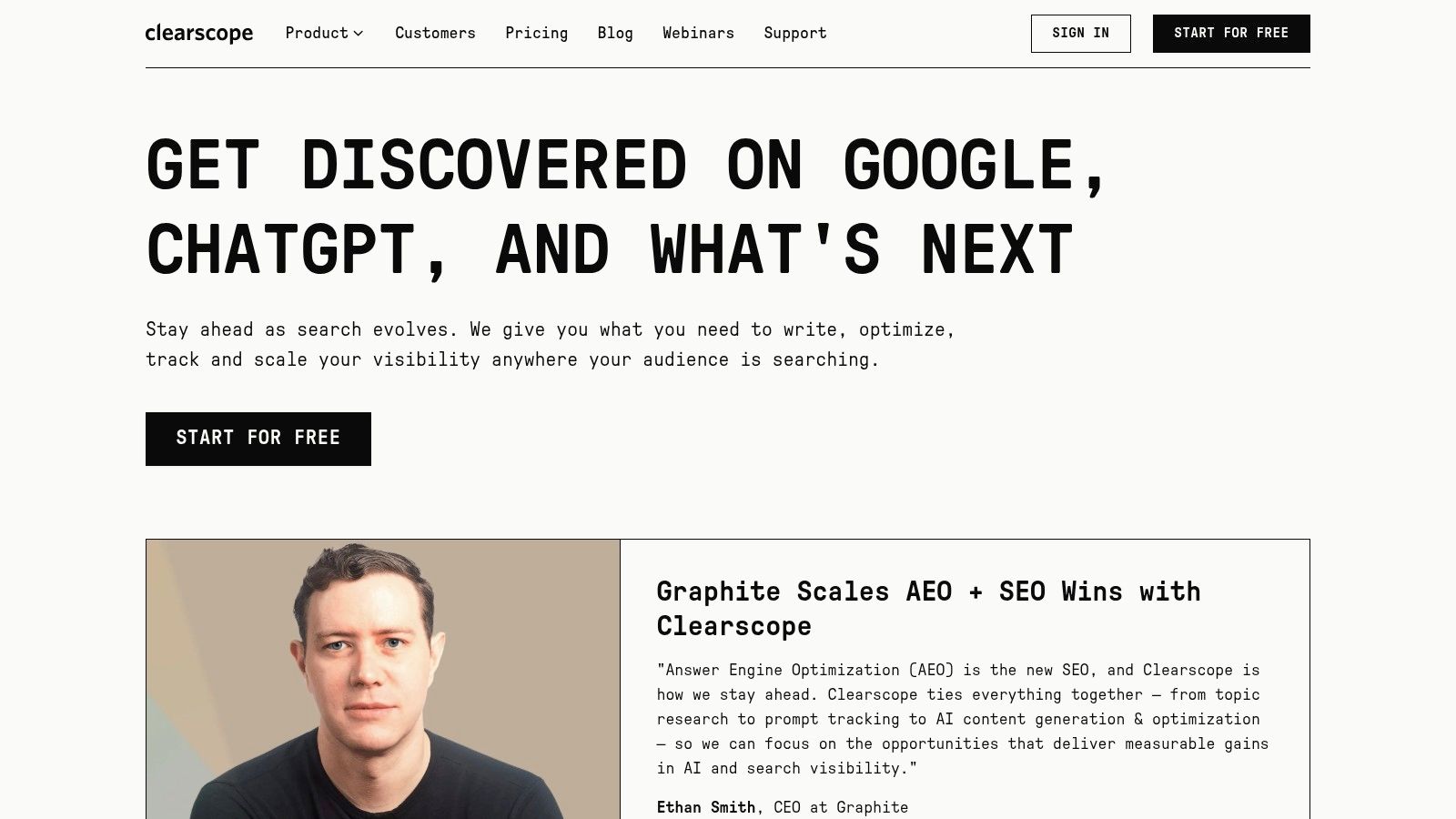
Clearscope solves a different problem from a pure outline generator. It gives strategists a controlled environment for standardizing what a brief must contain, then gives writers and editors a consistent way to assess topic coverage. Its Editor includes Research and Outline tabs, customizable brief templates, topic terms, content grading, and inventory tracking.
That template layer is valuable for agencies. I can define recurring requirements for a comparison page, an educational guide, or a product-led article, then make sure each writer receives the same baseline information. The brief becomes a repeatable operating document rather than a strategist's personal collection of notes.
Why teams choose Clearscope
Clearscope's topic modeling has a strong reputation for accuracy, but its value is less about producing the longest possible outline. It's better at answering whether the finished page covers the relevant subject matter clearly and completely. Inventory features also help teams monitor published content quality instead of treating the brief as the end of the workflow.
Its newer AI and LLM visibility features, including tracked prompts, broaden the measurement layer. I'd still separate that from the original brief decision. A page can cover relevant terms and still fail to answer the user's actual task, so I verify the SERP format and intent before accepting the generated structure.
The principal downside is cost. Clearscope is positioned above many brief-focused alternatives, and credit-based usage requires planning when multiple writers or markets share the account. It's a strong fit for teams that value brief consistency, editorial governance, and reliable content evaluation. It's less compelling if the only requirement is a fast outline for occasional publishing.
4. MarketMuse
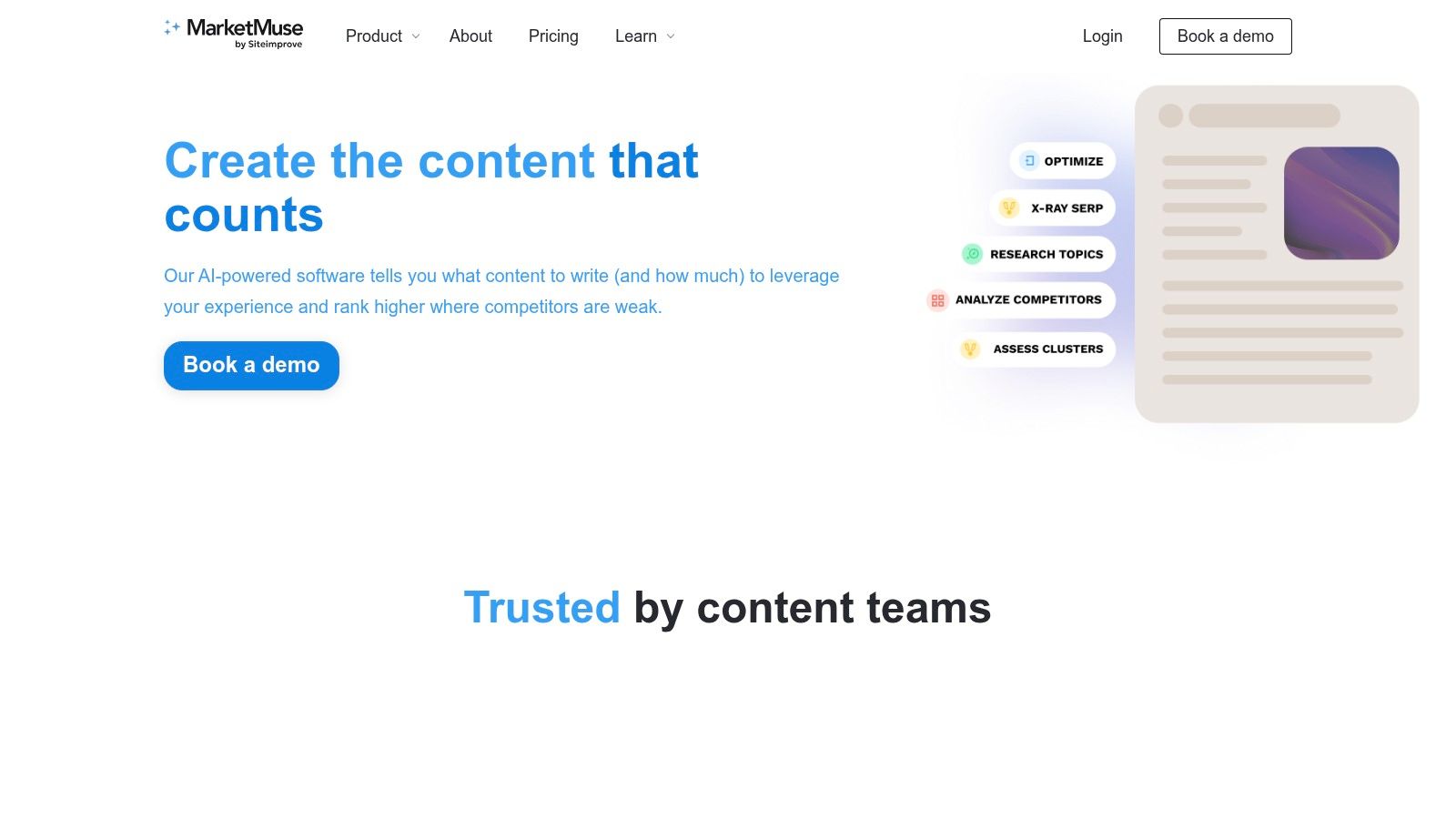
MarketMuse is the option I'd consider when a content brief must support topical authority, not just one article. It generates structured briefs from topic modeling and SERP analysis, with subtopic coverage and intent built into a deeper planning environment. Article Briefs, inventory tools, topic tracking, strategy documents, SERP X-Ray, heatmaps, and Topic Navigator make it more suitable for teams managing a content system.
That depth comes with a learning curve. A new writer may not need every strategic view in the platform, while a content strategist responsible for a large knowledge base may depend on them. The important distinction is that MarketMuse helps decide what a page should cover in relation to the wider topic, not only what competing pages mention.
Where the enterprise orientation helps
MarketMuse's inventory and topic tracking can expose gaps, overlaps, and weak coverage across an existing site. That's useful when publishing decisions involve updates, consolidation, redirects, and supporting pages. Optional Managed Briefs also provide a path for teams that want expert-assisted planning rather than purely self-serve generation.
I wouldn't choose it solely because the resulting brief looks detailed. More fields don't automatically create a better editorial decision. I test whether each recommended section supports the query's intent, contributes original value, or serves a clear internal-link relationship.
Brief credits can make costs rise for large-volume programs, and the interface takes more time to learn than lighter tools. For an enterprise team with a real topical-authority program, that complexity can be justified. For a small team producing straightforward pages, it may create more process than the workflow needs.
5. Frase
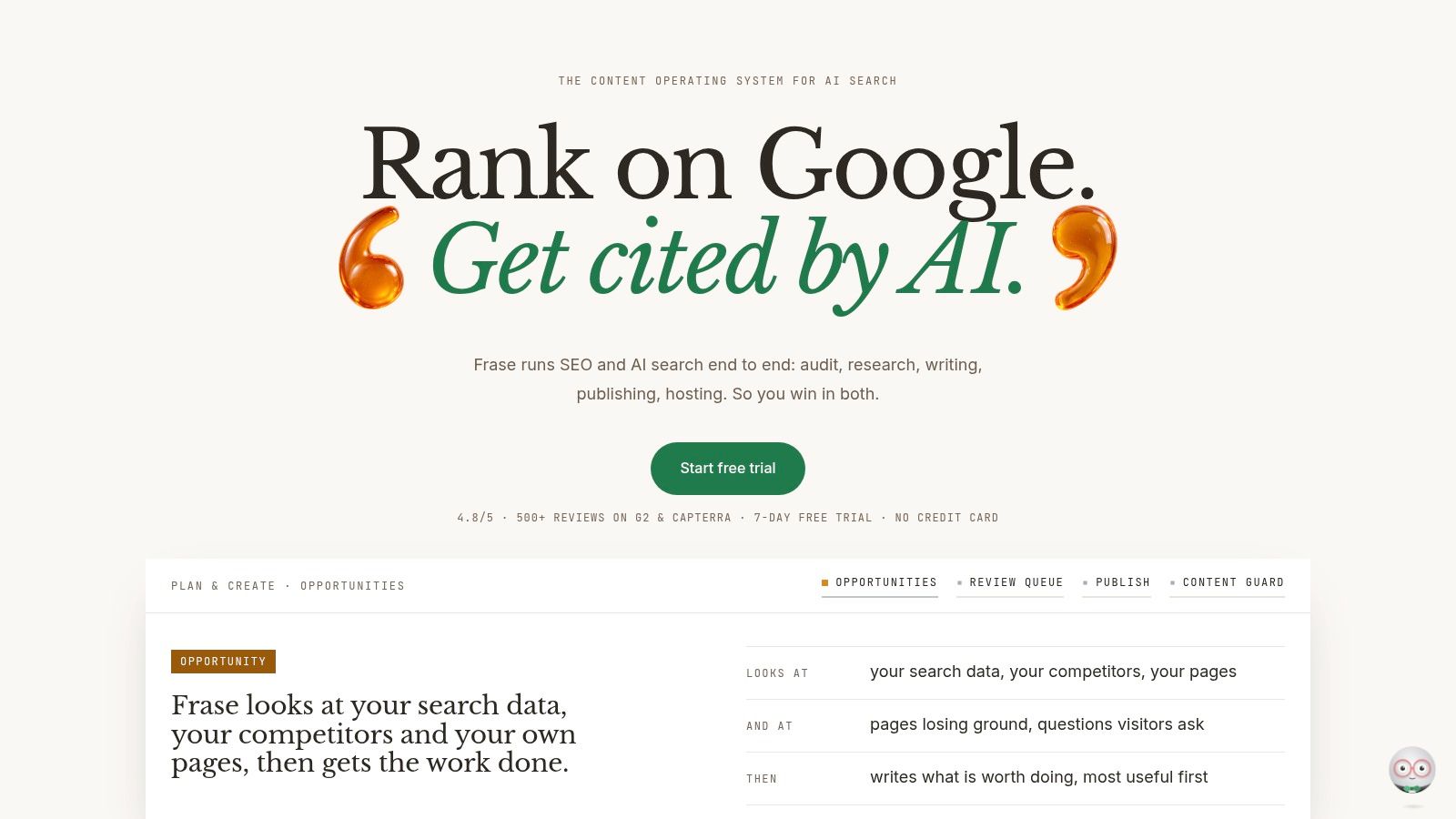
Frase is designed for speed from target keyword to usable document. It automates SERP research, generates customizable AI content briefs, and lets the team draft and optimize against competitors in the same document. That makes it attractive when a strategist needs to get a writer or editor moving quickly without assembling a separate research packet.
The workflow covers competitor analysis, questions, headings, entity suggestions, AI drafting, and optimization. I've found this kind of page-level continuity useful for content teams that have already settled the site architecture and need a fast production interface. The tool's AI visibility modules also track visibility across ChatGPT, Claude, Gemini, and Perplexity, which is useful when the team wants to monitor more than traditional rankings.
Speed is useful only when the premise is right
Frase's main limitation is strategic scope. It can produce a practical brief quickly, but a heavy site-wide program may still need dedicated tools for clustering, market prioritization, and broader competitor research. If the target keyword belongs to a crowded cluster, I wouldn't let the generated outline decide the URL without checking existing pages first.
Plan limits also deserve attention for agencies. A fast workflow can become expensive or restrictive if every draft, optimization pass, and client revision consumes credits. The best use case is a team that values brief-to-draft velocity and can validate the strategic decisions before generation.
Before approving a brief, I ask one writer to explain the page's audience, intent, unique angle, and required evidence using only the document. If they can't, the brief is fast but incomplete. This ejemplo de brief de contenido SEO is useful for checking whether the document contains actionable guidance rather than a list of terms.
6. Semrush
Semrush is the sensible choice when the team already runs keyword research, competitor analysis, position tracking, and content operations inside the Semrush ecosystem. Its SEO Content Template and Outline Builder connect related keywords, recommended length, readability guidance, backlink targets, and writing workflows to the wider suite.
That continuity reduces tool switching. A strategist can begin with keyword and competitor data, create an outline, and pass a structured document to stakeholders without introducing a separate briefing platform. For organizations with existing Semrush processes, the convenience may matter more than small differences in outline depth.
A good suite choice, not always the deepest brief
Semrush briefs are solid, especially when the organization needs one vendor for research and execution. Topic Research and on-page recommendations support planning, while integrations across the suite make it easier to connect a brief with tracking and later optimization.
The trade-off is specialization. Surfer and Clearscope can feel more granular inside the writing and scoring experience, particularly when a writer needs immediate coverage feedback. Semrush delivers the strongest value when the team also needs its broader SEO capabilities. Buying it only for content briefs may leave much of the platform unused.
I'd also check whether the proposed brief identifies the precise ranking URL and cluster owner. A broad keyword list can appear thorough while leaving the most important architectural decision unresolved. The tool works best when a strategist supplies that judgment and uses the generated recommendations to accelerate, not replace, the review.
7. Content Harmony
Content Harmony is purpose-built around the brief as a client-ready handoff. Its workflow moves from keyword reports to standardized briefs and then to a content grader. That sequence suits agencies and freelancers that need to produce consistent documents for several clients without relying on each strategist's preferred format.
The platform emphasizes search-intent analysis, competitor outlines, question analysis, and shareable brief links. Those features address a practical agency problem: clients often need to review the strategic direction before a writer begins, while writers need a clean document that separates required coverage from optional ideas.
Strong handoffs, narrower scope
Content Harmony's grader helps assess coverage and completeness after drafting. API and webhook support can also fit teams that connect briefing with project management or publishing systems. Free onboarding and training are useful when an agency needs to roll out a common process across strategists and writers.
The limitation is scope. This is primarily a page-level briefing and grading tool, not an all-in-one platform for competitor reverse-engineering, backlink research, or site-wide content architecture. International and non-English support is also still expanding, so global teams should validate language coverage against their actual markets rather than assume that an English workflow transfers cleanly.
I'd choose Content Harmony when the bottleneck is inconsistent briefs and client collaboration. I'd look elsewhere when the bottleneck is discovering which pages to create, how clusters should be separated, or how content connects to broader authority-building work.
8. Outranking
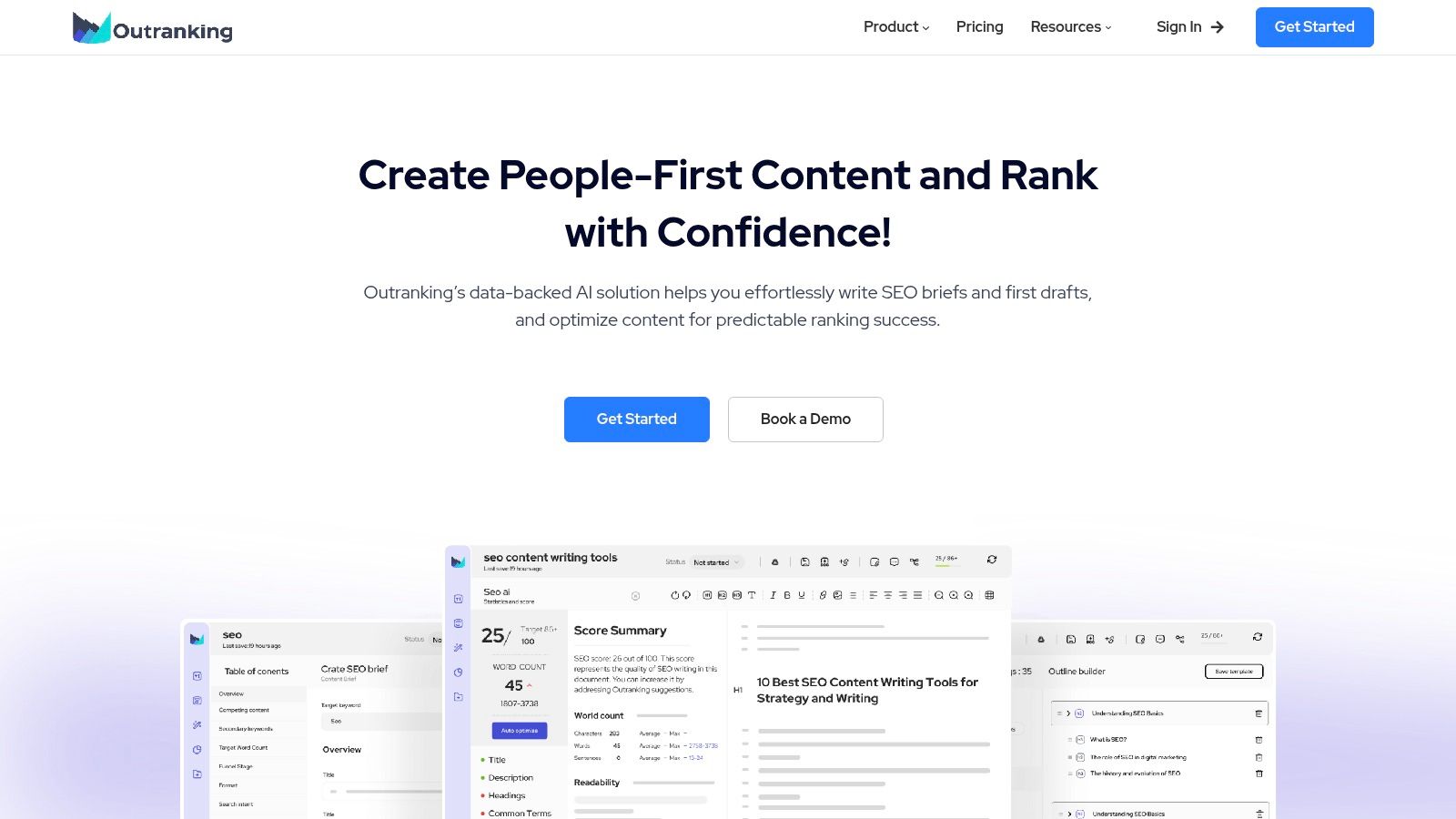
Outranking compresses research, briefing, drafting, and optimization into an SEO Documents workflow. It's aimed at teams that want to move from SERP analysis to a first draft in one pass, with unique outlines and internal-linking suggestions included in the process.
That compression can increase throughput, especially for a small team where the same person researches and drafts. Automatic optimization and internal-linking assistance are useful for refresh workflows, where the goal is to improve an existing page rather than create a completely new strategy. Multi-language support also makes the platform relevant to teams operating across markets, although every market still needs local SERP validation.
The draft needs an editor
Outranking's main risk is assuming that a rank-driven outline and AI draft equal a publishable page. Heavy AI drafting still needs editorial review for factual accuracy, differentiation, tone, and unsupported recommendations. I treat its first draft as raw material, not as the acceptance standard.
The document and credit system can also be complex because documents, drafts, and assessments draw on the operating model. Pro and agency users may accept that trade-off, but teams should map their expected workflow before choosing a plan.
I'd pick Outranking when the priority is research-to-draft compression, especially for repeatable content formats. I wouldn't use it as the only system for deciding whether several similar queries should share a URL. That decision belongs in a clustering and cannibalization review before the document is generated.
9. SE Ranking
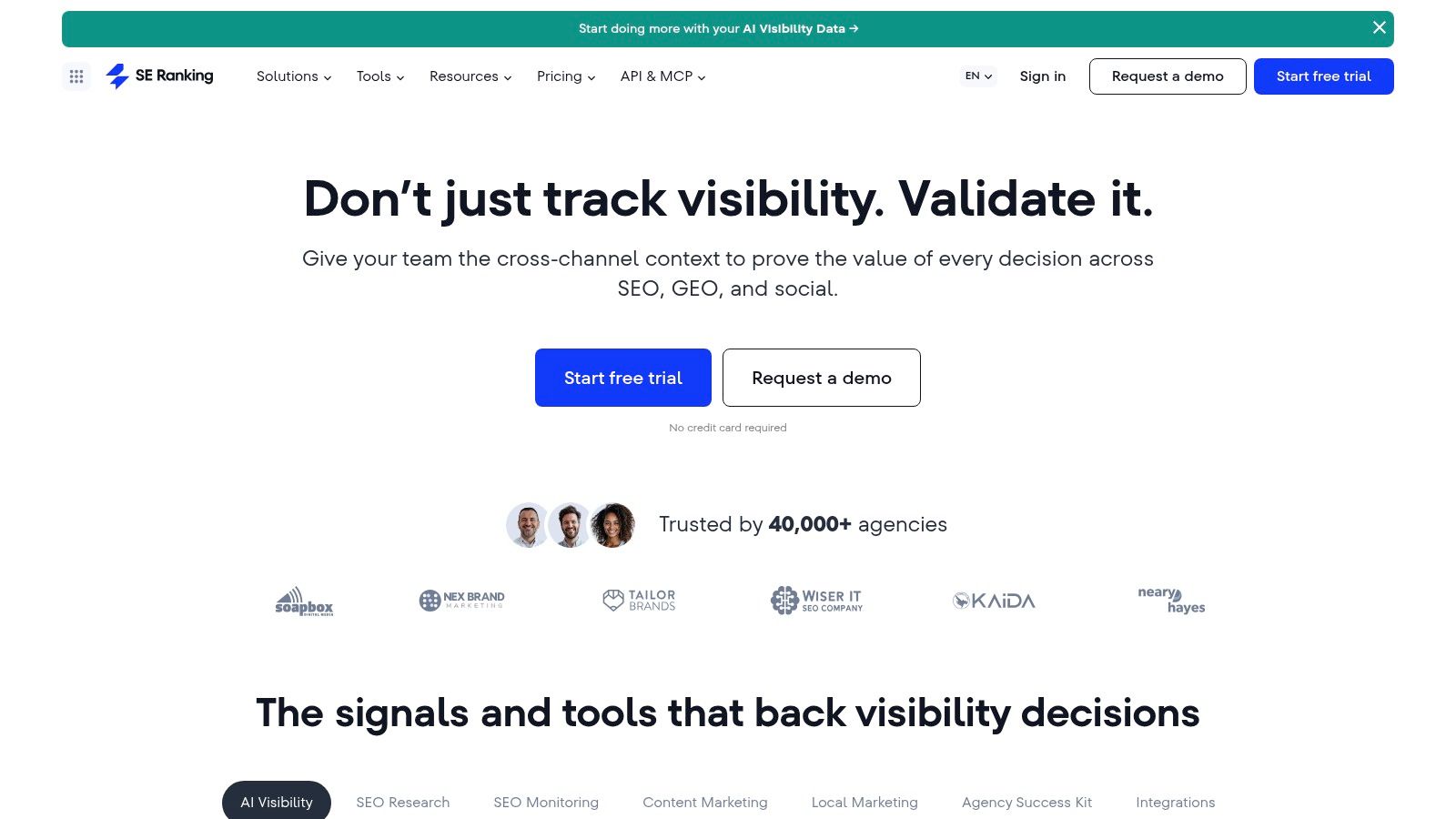
SE Ranking's Content Editor is a practical middle ground for teams that want briefing and optimization inside a broader SEO suite. It analyzes top results and recommends structure, relevant terms, length, readability, and title or Hx options. The platform also supports shared outlines, in-editor optimization, a Google Docs add-on, and an optional plagiarism checker.
The Google Docs connection is the feature I'd pay closest attention to when writers don't want to work inside a specialist editor. A brief that reaches the writer's normal environment creates less friction than one that requires a new drafting habit. That matters for agencies with contractors or subject-matter experts who won't regularly log into an SEO platform.
Budget-friendly doesn't mean universal
SE Ranking combines brief creation and optimization at a relatively accessible suite level, but NLP depth varies by language. I'd test the recommendations in each target market, especially for multilingual content, before standardizing the workflow. A tool can support multiple languages while still producing uneven semantic guidance across them.
The platform is also less prescriptive than Surfer or Clearscope in some use cases. That can be an advantage for experienced editors who dislike rigid scoring, but a drawback for junior writers who need clearer boundaries.
I'd select SE Ranking when the decision is how to give writers a familiar editing workflow without buying a dedicated enterprise content platform. I'd add a separate cluster review when the publishing program spans many closely related pages.
10. Keyword Insights
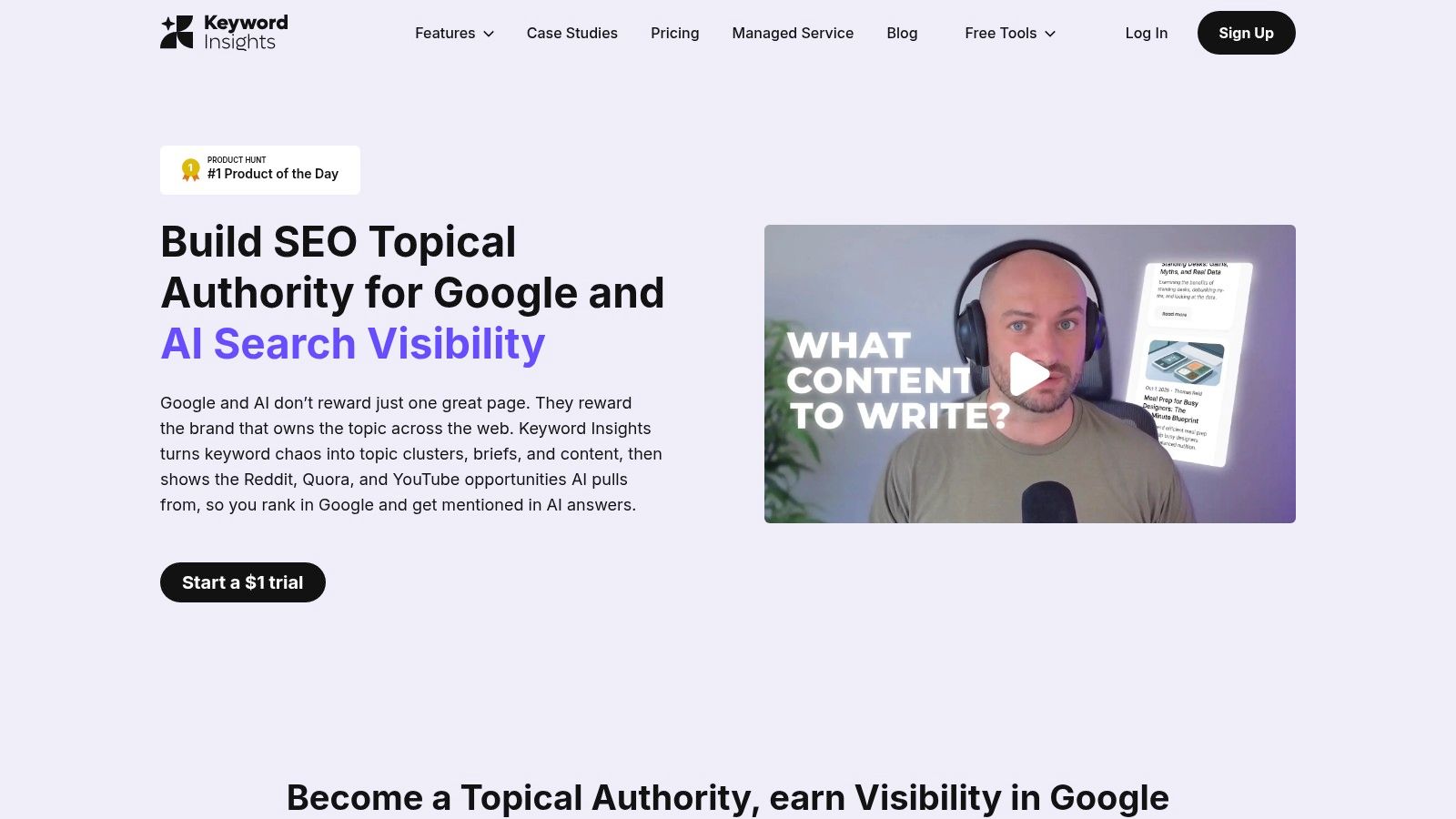
Keyword Insights starts with the decision many brief tools leave until later: which queries belong together. Its workflow moves from keyword clustering and intent detection to detailed content briefs aligned with those clusters. That makes it especially useful for teams planning many pages and trying to prevent cannibalization before publication.
The supporting brief can include secondary keywords and DA or PA context, while the platform offers PAYG and subscription options through a credit system. Regular product updates are helpful for a planning-focused tool, but I'd still examine the output manually because clustering is a strategic decision, not merely a technical grouping exercise.
Best for programmatic planning
A common practical rule is to assign one primary URL per keyword cluster, then have supporting pages link toward that cluster page instead of competing with it (keyword cannibalization guidance). Keyword Insights fits that planning motion well. It helps turn a large keyword set into a page map before writers receive individual briefs.
The trade-off is writer experience. The interface is optimized for planners, so writers may prefer to edit in Google Docs, WordPress, or Microsoft Word. Heavy users also need to monitor credits carefully.
I'd choose Keyword Insights when the main bottleneck is turning a large keyword universe into a coherent publishing plan. I wouldn't choose it alone when the priority is in-editor optimization, AI drafting, or enterprise governance.
Top 10 Content Brief Generators: Feature Comparison
| Producto | Características principales | UX / Quality (★) | Value / Price (💰) | Público objetivo (👥) | Propuestas de valor únicas (✨) |
|---|---|---|---|---|---|
| 🏆 SemDash | 6.6B keywords, 2.7T backlinks, 600M SERPs, AI briefs, gap & clustering | ★★★★☆ fast, clean UI, fresh data | 💰 Budget-friendly, free trial | 👥 SEOs, agencies, content teams, solopreneurs | ✨ URL-level mapping, AI Overviews, unlinked-mention & broken-link recovery, MCP integration |
| Surfer | Live SERP-based briefs, in-editor score, NLP entity suggestions, Smarter Outlines | ★★★★ editor-first, prescriptive | 💰 Mid-tier; plan/credit limits | 👥 Content teams, writers, editors | ✨ One-click Smarter Outlines, tight outline→draft handoff |
| Clearscope | Research/Outline tabs, customizable templates, content grading, inventory | ★★★★ reliable topic modeling | 💰 Higher-priced, credit model | 👥 Agencies, strategists, content leads | ✨ Strong topic modeling, standardized briefs & content inventory |
| MarketMuse | Data-rich briefs, subtopic coverage, inventory & topic tracking, SERP X‑Ray | ★★★★☆ deep/enterprise-grade | 💰 Premium; credits add up | 👥 Enterprise content teams, topical authority builders | ✨ Managed Briefs service, deepest brief structure |
| Frase | Fast AI-generated briefs, competitor analysis, drafting + optimization, LLM visibility | ★★★★ quick & usable | 💰 Mid-range; plan limits | 👥 Small teams, agencies needing speed | ✨ Rapid AI briefs + in-doc drafting, multi-LLM visibility tracking |
| Semrush | Content Templates, Outline Builder, topic research, suite integrations | ★★★★ solid, integrated | 💰 Best value if using Semrush suite | 👥 Teams already on Semrush, full-stack SEOs | ✨ Seamless continuity from research → tracking across Semrush tools |
| Content Harmony | Brief-first workflow, templates, intent analysis, content grader, shareable links | ★★★★ consistent briefs | 💰 Mid-tier, agency-focused | 👥 Agencies, freelancers, client-facing teams | ✨ Client-ready shareable briefs, onboarding & training |
| Outranking | SEO Documents: briefs + AI drafts, SERP scoring, internal linking automation | ★★★★ compresses research→draft | 💰 Pro/agency pricing, credit system | 👥 Teams wanting research→draft in one pass | ✨ Internal linking automation, doc-based workflow |
| Clasificación SE | Outline/brief builder, content score, term suggestions, Google Docs add-on | ★★★ budget-friendly, variable NLP | 💰 Suite económica | 👥 Small teams, budget-conscious SEOs | ✨ Google Docs workflow, optional plagiarism checks |
| Keyword Insights | Keyword clustering → brief generation, DA/PA context, credit or PAYG pricing | ★★★★ planner-focused UX | 💰 Flexible PAYG or subscription | 👥 SEO planners, site architects scaling pages | ✨ Cluster-first briefs to reduce cannibalization and scale briefs |
Choose the Workflow You Can Actually Run
The best content brief generator depends less on the number of features than on the decision your team needs to make repeatedly. If live SEO data, competitor research, keyword clustering, SERP history, AI-assisted briefs, and broader planning should share one workspace, I'd start with SemDash. Its URL-level mapping helps connect a query to the page that ranks, while clustering helps prevent a new brief from competing with an existing URL.
Choose a dedicated editor when the main problem is writer optimization and scoring. Surfer is strong when the brief needs to flow directly into an optimization-focused draft. Clearscope is a better fit when standardized templates, topic modeling, content grading, and inventory management matter more than rapid outline generation.
Choose an enterprise platform when the team is building topical authority and can support a deeper operating model. MarketMuse earns consideration when inventory, topic tracking, strategy documents, and detailed subtopic coverage justify the learning curve. Choose Semrush when the broader suite already powers keyword research, competitor analysis, position tracking, and stakeholder workflows.
For large publishing programs, start with the architecture. Keyword Insights is suited to clustering-led planning, while Content Harmony is strongest when agencies need consistent, shareable, client-ready briefs. Frase y Outranking make sense when the priority is moving quickly from page-level research to drafting, provided an editor checks the output. Clasificación SE is practical when writers prefer Google Docs and the team wants briefing inside a broader, budget-conscious SEO platform.
I use the same selection test before committing:
- Run one target query through every shortlisted tool: Don't compare screenshots. Compare the actual brief produced for the same search.
- Verify the intent against the current SERP: Confirm whether the results favor a guide, comparison, tool page, landing page, or another format. A practical brief should translate the query into an explicit intent statement (SEO content brief strategy).
- Remove unsupported recommendations: Delete sections, entities, statistics, and claims that don't have a clear reason to exist or a source the writer can verify.
- Map the brief to one URL: Check existing pages and assign one primary URL to the cluster. Don't let the generator create a new page just because it found another related phrase.
- Ask a writer to execute it without a strategy call: If the writer can't explain the audience, page type, angle, required coverage, internal links, and conversion action from the brief, the handoff has failed.
- Measure editorial acceptance, not generation speed: A brief that generates quickly but causes repeated rewrites is creating work, not removing it.
The SERP itself should remain the final check. A practical workflow starts with an incognito search, reviews the top results, records the dominant format and depth, and identifies the question those pages answer before generating the outline (SERP-informed content brief workflow). That prevents blind imitation and gives the writer a clear basis for differentiation.
Your broader content process should also connect briefs to measurable business operations, including the guide to marketing KPIs and automation. The best content brief generator is the one that improves decisions, protects the site architecture, and gives a writer enough clarity to produce the right page. It isn't the tool that merely produces more text.
SemDash brings keyword discovery, competitor and URL-level research, clustering, historical SERP analysis, AI-assisted briefs, and AI Overviews visibility into one practical SEO workspace. Test your next target query with SemDash, then judge the brief by whether it gives your writer a defensible page strategy they can execute without starting over.