

You can lose clicks on a page that still sits at the top of the blue links. That's the weird part of AI Overviews, and it's why rank reports start lying to you the moment Google answers the query before the user ever reaches your result.
I've audited enough of these SERPs to know the same mistake keeps showing up. Teams watch rankings, see a stable line, then wonder why traffic feels thinner, why citations are going to competitors, and why a page that “looks fine” in Search Console isn't performing the way the business expects.
Tabla de contenido
- Why AI Overviews Break Traditional Rank Tracking
- Building Your Tracking Foundation Before You Check a Single SERP
- How I Manually Detect and Log AI Overview Citations
- Scaling to Automated Monitoring and SERP History Analysis
- Connecting Citations to Real Traffic Without Misattribution
- Your Repeatable Weekly Routine and Next Actions
Why AI Overviews Break Traditional Rank Tracking
I still see teams open a rank report, spot a #1 position, and assume the page is safe. Then they look at clicks a week later and the curve has softened, even though nothing obvious changed on the page. That's the first clue that traditional rank tracking only measures one slice of visibility.
What's happening is simpler than most dashboards make it look. Google's AI Overviews launched in the U.S. on May 14, 2024, then expanded to more than 100 countries and territories on October 28, 2024, with rollout planned to reach over a billion users by the end of 2024. That matters because this isn't a niche test anymore, it's a global layer that needs monitoring across markets, not just one country's keyword set. Google's rollout announcement
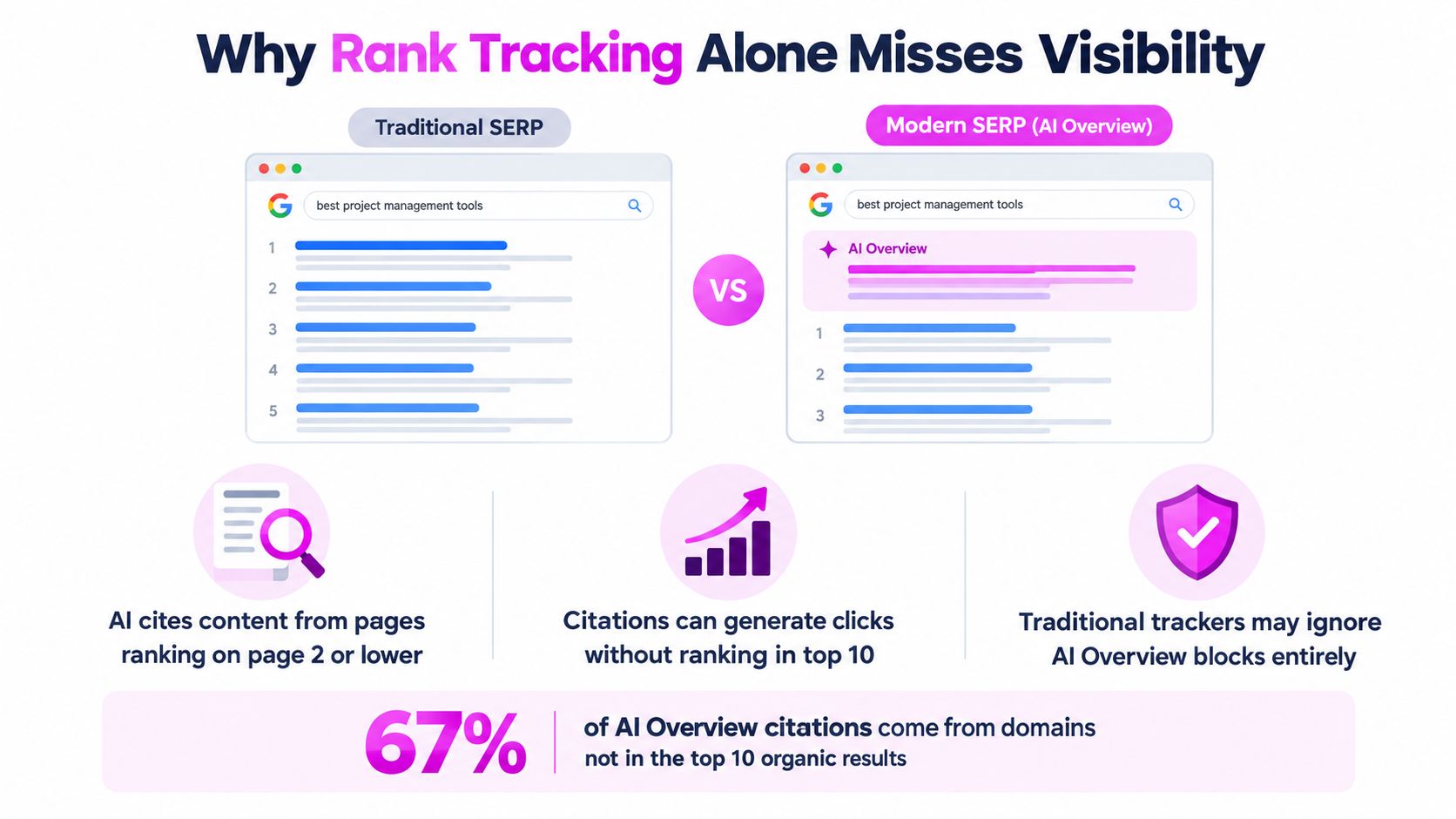
Three signals you need to separate
The first signal is whether a query triggers an AI Overview. The second is whether your URL is cited inside the overview. The third is what happens to traffic after the overview appears. If you collapse those into “rank,” you'll miss the part that moves revenue.
That separation isn't theory. Independent tracking guidance has shown that AI Overviews can materially affect click behavior, with one field experiment reporting AI Overviews on 42% of queries, outbound clicks rising from 0.38 to 0.61 per search when they were removed, and a 38% reduction in organic clicks on triggered queries. Another analysis found organic CTR for informational queries with AI Overviews dropped from 1.76% to 0.61%. CTR and click behavior analysis
Regla práctica: if you can't tell trigger, citation, and traffic apart, you're not tracking AI Overviews. You're just looking at partial organic reporting.
The other thing that breaks rank tracking is citation drift. Manual audits have shown that citation presence isn't stable enough to infer from rankings alone, and one cited study found only 17% of AI Overview citations came from pages ranking in the organic top 10, down from 76% in mid-2024. That means a page can win a citation from well outside the classic ranking band, so “we rank well” isn't proof of visibility. Citation and ranking overlap summary
For comparison, it helps to think about the difference between a featured snippet and an AI Overview, because the measurement problem isn't identical. I keep this reference in mind when triaging SERPs, and I link teams to a clear explanation of the distinction in this featured snippet versus AI Overview breakdown.
My rule is blunt. If the query can trigger an AI Overview, I treat rank as background context, not the primary KPI. Monitoring system starts with whether the overview shows up, whether my URL gets cited, and whether clicks change when the answer is moved into the SERP itself.
Building Your Tracking Foundation Before You Check a Single SERP
The fastest way to get noisy data is to start searching random keywords in a personal browser and call it monitoring. I do the opposite. I lock the environment first, because if the search context changes every day, the log becomes a scrapbook instead of a baseline.
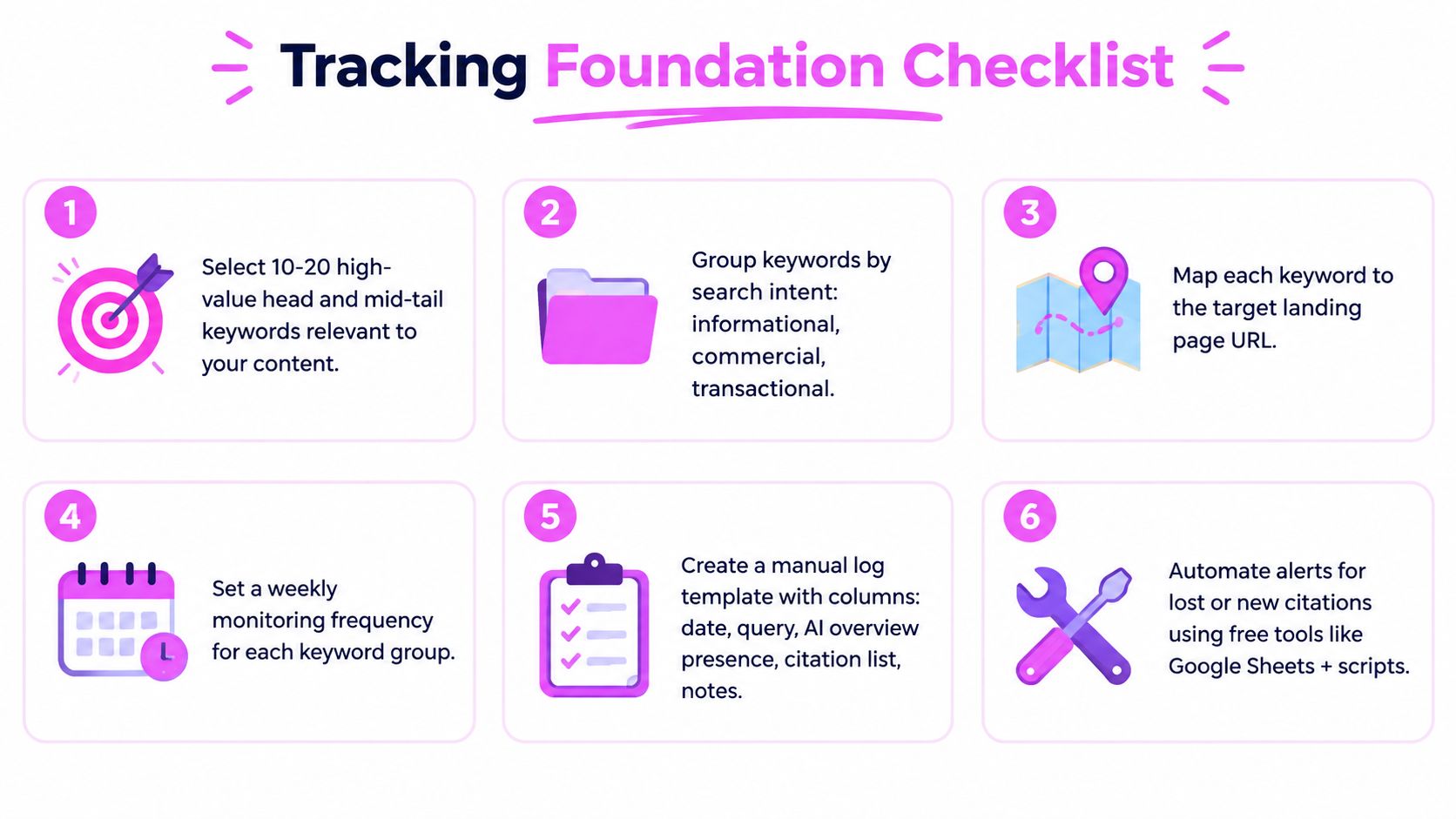
Start with the keyword set, not the tool
I keep the monitored list tight. The useful range is a focused set of high-value queries, grouped by intent and mapped to the page that should own the answer. That gives a clean comparison when a query starts triggering an overview or stops doing it.
The grouping matters more than many expect. An informational query can be answered very differently from a commercial or transactional one, and if you track them together, the citation patterns get muddy. I map each query to one target URL before I start, because the first question is never “where do we rank,” it's “which page should be cited if this query starts getting answered by Google?”
Standardize the SERP environment
I use incognito mode, log out of Google accounts, pin the market with location and language settings, and disable extensions that can hide the AI Overview block. That setup isn't fancy, but it keeps one person's session from drifting away from another's. The point is comparability, not perfection.
If you check desktop only, say so in the log. If you also need mobile coverage, separate it. A mixed device record turns into a false trend the moment one interface presents the overview differently. I'd rather have fewer clean checks than a bigger sheet full of inconsistent ones.
Regla práctica: don't build a tracking routine until the browser state, market, and device are locked. Otherwise every “trend” is just search personalization leaking into the sample.
Make the log work before the search does
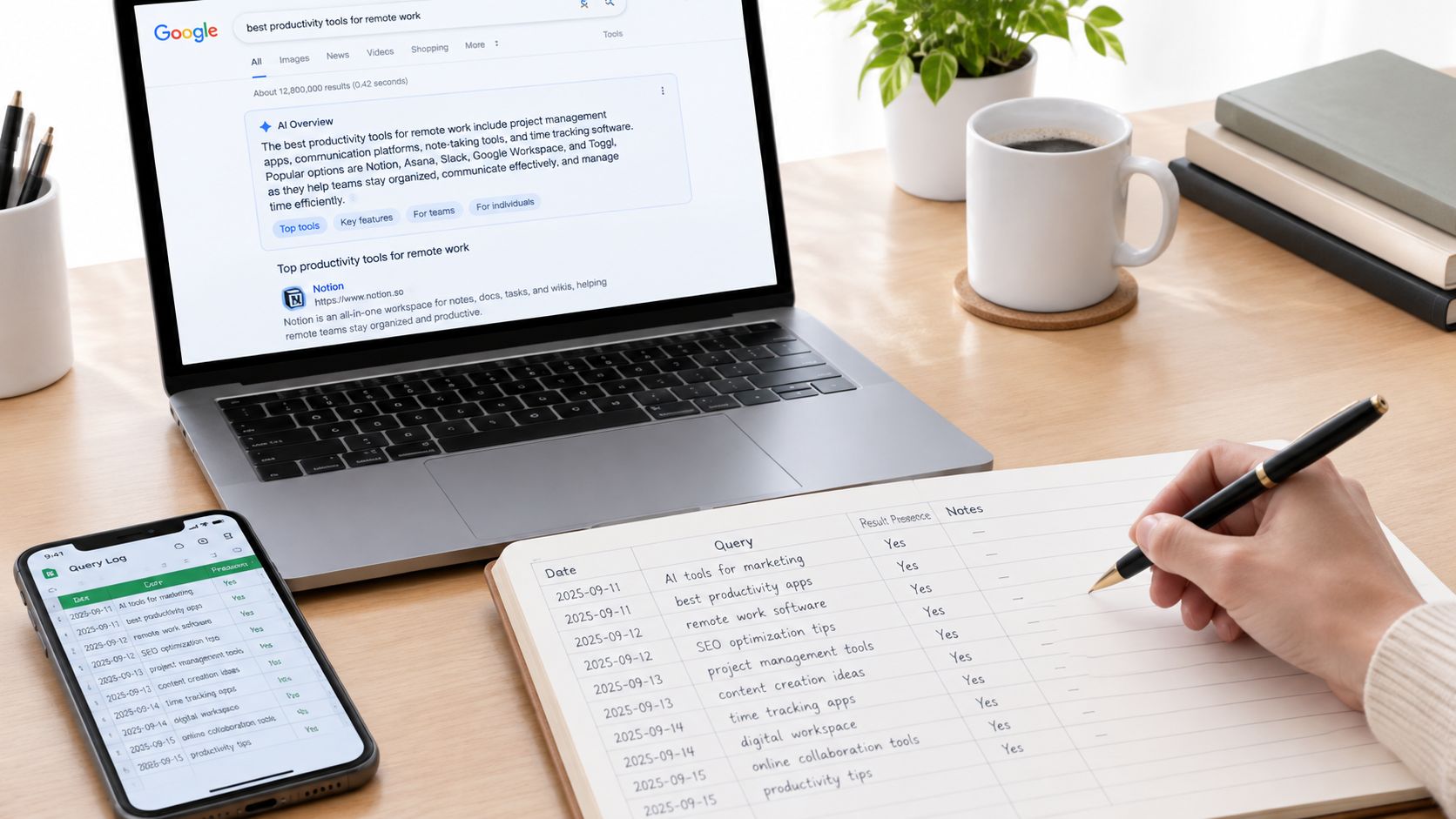
My manual sheet always includes the same fields, date, query, overview presence, citation list, and notes. Once that template is in place, it's easy to add context like competitor names, citation format, or whether the block was collapsed.
A weekly cadence is usually enough to start, but only if the sample is stable. That is why a small monitored set wins over a sprawling keyword dump. It keeps the audit readable when you compare this week's crawl against last week's exact SERP conditions.
For the broader reporting layer, SourceLoop reporting automation is useful once raw checks need to feed a repeatable workflow.
The takeaway is simple. Build the foundation before you obsess over what the overview says. Once the environment is repeatable, you can separate trigger, citation, and traffic attribution instead of treating rank as a proxy for visibility.
How I Manually Detect and Log AI Overview Citations
The manual check starts the same way every time. I search the keyword in a clean browser session, confirm whether an AI Overview appears, and then expand the block before I decide anything. Collapsed panels hide too much, and if I don't open them, I miss citations that aren't visible in the default view.
Log what's actually there, not what the ranking suggests
I record five things for every query. Whether the overview appeared. Whether my URL was cited. Which competitors were cited. How the citation was formatted. And a screenshot of the exact SERP state. That snapshot matters because the panel can change before the next check, and memory is a terrible substitute for evidence.
People often make the wrong assumption. A strong organic ranking doesn't guarantee a citation, and a citation doesn't always come from a page that looks like a classic top result. That's why I never infer inclusion from rank position alone. I want the citation list in front of me, not my best guess about who “should” be there.
Handle collapsed panels and volatile queries separately
Some queries flip day to day. Some expand to show a fuller citation set only after I click Show more. I treat those as two different audit states, because a hidden citation and a visible citation don't carry the same practical value.
The volatile ones get special attention. If a query keeps changing its overview formatting, I mark that in the notes instead of forcing a clean yes-or-no interpretation. The point of the log isn't to make the SERP behave. It's to preserve the state that Google showed that day.
I've learned to treat the first visible panel as the baseline and the expanded block as a second layer of evidence. That small habit catches the citations most teams never see.
The other mistake I see is scanning too many queries in one sitting and flattening the result into “overview present” or “overview absent.” That loses the useful detail. You need the citation list, because competitors often appear there long before your own URL does.
For a practical walkthrough of the exact visual log style I use, the embedded clip below is a good reference point for the workflow mindset.
Keep the weekly sample small enough to inspect
A lot of teams ask how many queries to check manually. I keep it manageable and focused on high-intent questions, then I check them the same way every week. That's enough to surface whether a domain is winning citations, losing them, or getting pushed out by a competitor.
The useful part of the log is what happens next. I can compare one week to the next, see which competitors were cited, and decide whether the content needs a rewrite, a structural change, or just a tighter answer near the top. If a page shows up in the overview but not in the citation list, I mark that too, because “appearing nearby” isn't the same as being used.
If your current process can't tell the difference between trigger, citation, and competitor presence, it's incomplete. Manual auditing fixes that before automation starts smoothing over the details.
Scaling to Automated Monitoring and SERP History Analysis
Manual audits are ground truth, but they do not scale well once the query set grows. The next move is scheduled scanning plus SERP history, because AI Overviews change over time and one-off checks miss the drift. One large study found AI Overviews appeared for 6.49% of queries in January and rose to nearly 25% by July before stabilizing around 15.69% in November, while another reported AI Overviews on roughly 30% of U.S. desktop keywords by September 2025. Prevalence and drift summary
Use automation for frequency, not certainty
Automation is useful for repeatable pattern spotting. It is weaker at reading a strange SERP state, a collapsed block, or a query that flips between source sets. I use automated scans to watch the priority keyword list, then validate unstable queries manually when the results look noisy.
The strongest monitoring setup is layered. Run the scheduled scan, compare the current citation set with the previous refresh, and use history to see where the overview changes the most. One Ahrefs-referenced report noted that 45.5% of AI Overview citations change when the overview updates, which is exactly why a single weekly snapshot can hide how unstable a query really is. Citation volatility and monitoring guidance
That small habit catches citations that are hidden in the collapsed panel and often missed in quick scans.
Read SERP history for volatility, not vanity
SERP history shows whether a topic is steady enough for monthly reporting or volatile enough to deserve weekly attention. I watch for shifts in prevalence, repeated citation churn, and queries that suddenly start behaving like zero-click terms. When the pattern moves, the content plan should move with it.
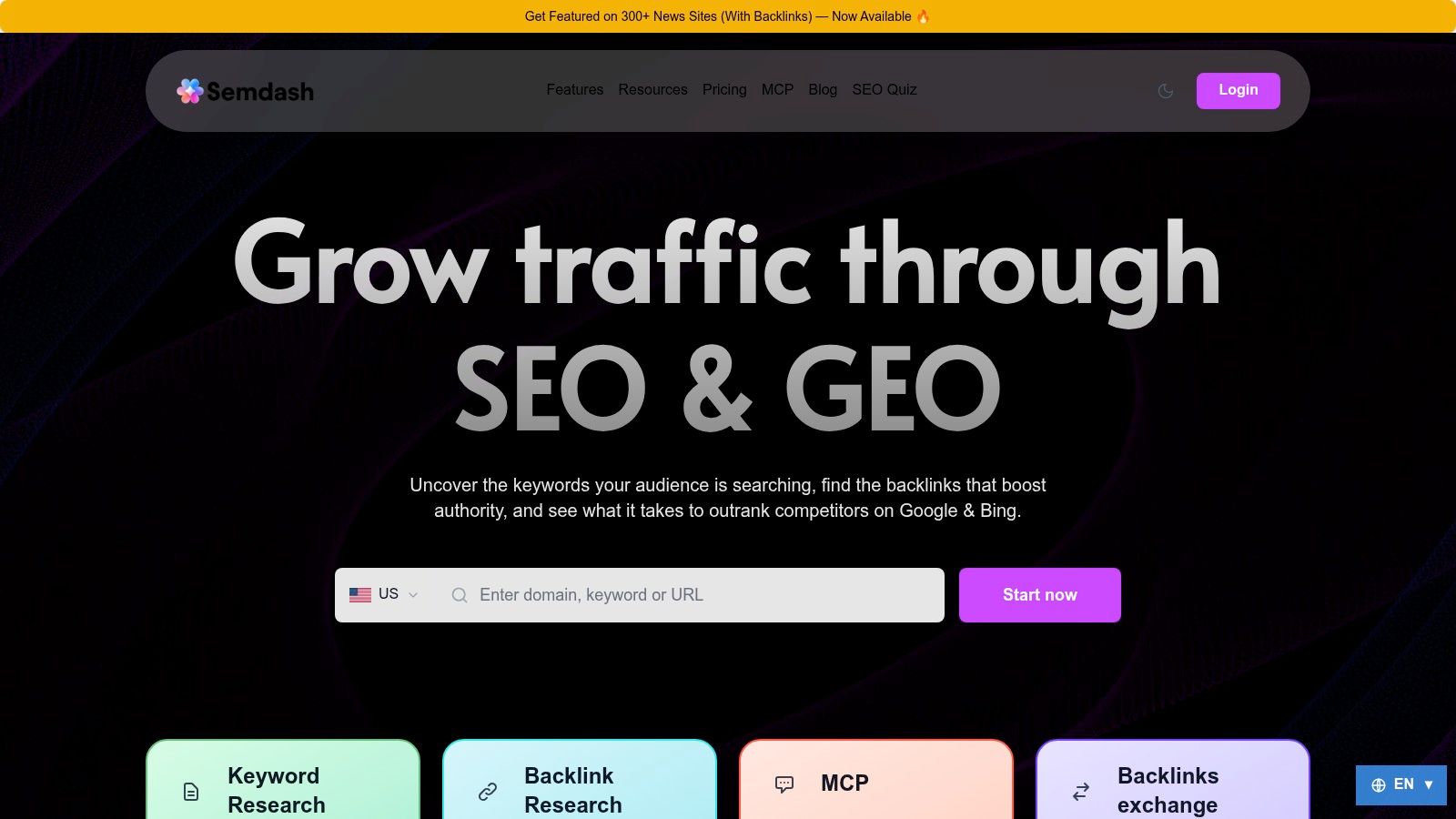
Automation tools earn their keep when they map the exact cited URLs and preserve the timeline. I want to know not just that a keyword triggered an overview, but which page Google chose at each point in the history. That is the difference between a dashboard and a decision tool.
Regla práctica: if a query keeps swapping cited URLs, treat it as unstable until the history proves otherwise.
For teams that want reporting to move automatically from scan to recap, SourceLoop reporting automation is a sensible adjacent workflow to pair with the monitoring layer.
A screenshot from a tool view is useful here because it forces you to look at the exact SERP state instead of a summary metric.
Use history to decide how often to monitor
I track history to decide cadence. Stable topics can sit in a slower reporting loop. Flaky topics need tighter checks, because a monthly report can miss the week when a competitor won the citation and held it long enough to matter.
That is also why I do not trust trigger rate alone. A query can trigger an AI Overview often and still swap sources constantly. If the citation set changes every refresh, the key metric is volatility, not just presence.
Once the history is in place, automation becomes a filter, not a replacement. It flags what needs a human look, which is exactly the point.
Connecting Citations to Real Traffic Without Misattribution
Visibility isn't the same as traffic, and that gap is where reporting gets messy. Google Search Console now exposes an AI Overviews-generative AI report under Performance > Search results, but it shows impressions only and breaks the data down by page, country, device, and date, not clicks or queries. That means I can confirm exposure in the AI layer, but I can't treat that report as proof of business impact. Search Console generative AI reporting notes
| Señal | What It Tells You | Limitation | Action to Take |
|---|---|---|---|
| Impresiones de IA generativa | The page showed in the AI layer | No clicks or query dimension | Use it as visibility proof |
| Main Performance clicks | Traffic that landed on the page | Blends AI Overview clicks into organic | Cross-reference with citation history |
| Citation log | Which URL was used in the overview | Doesn't show downstream sessions by itself | Match it to date and page movement |
| Device and country splits | Where visibility changed | Doesn't isolate query intent | Use it to narrow manual checks |
Use the two GSC views together
The generative AI report gives me the show-up signal. The main Performance report tells me whether traffic changed. I keep them separate on purpose, because impressions without clicks can look like success when the page didn't drive engagement.
That split matters even more because clicks from external links inside AI Overviews still count in the broader Search Performance report, not the generative AI report. So if I only live inside the AI report, I'm missing the traffic piece entirely. Search Console and click split explanation
What I do instead is line up the citation log with traffic movement in the main report. If a URL starts appearing in AI Overviews and the page traffic shifts at the same time, I have a strong directional signal. If impressions rise but clicks don't move, I don't overread it.
Watch for traffic that gets filed under the wrong channel
A lot of AI Overview traffic is harder to isolate than teams expect. Some sessions get misattributed to Direct, which makes the reporting gap look larger than it really is. That's why I don't use channel labels alone to judge impact.
The point is to answer a practical question. Which cited URLs are driving outcomes, and which ones are only visible? If I can't connect the citation to the traffic movement, I avoid calling it a win.
For a broader monitoring lens that pairs traffic analysis with site-level reporting, I also keep SemDash traffic monitoring guidance in the toolbox when I'm aligning AI visibility with page performance.
Regla práctica: don't report AI Overview visibility as if it were revenue. First prove exposure, then prove clicks, then decide whether the citation matters commercially.
The cleanest reporting setup is still a reconciliation layer. AI Overview appearance history, citation logs, and GSC traffic data all need to sit in the same sheet or dashboard before the story makes sense.
Your Repeatable Weekly Routine and Next Actions
A workable weekly routine is boring in the best way. I scan the fixed keyword set, validate the volatile queries by hand, update the citation log, and compare the newest visibility history against the prior week. If a page loses citations but keeps rankings, I don't panic, I inspect the SERP state and check whether the overview changed source selection instead.
Use simple decision rules
If a query triggers an overview but the domain isn't cited, I flag the page for content revision. If a page is cited but traffic doesn't move, I check attribution and the main Performance report before I touch the content. If a topic keeps swapping citations, I move it to weekly review until the history settles.
That decision tree keeps the work focused. It also prevents the usual overreaction to one bad week. AI Overviews shift enough that a single dip can be a refresh cycle, not a real loss of visibility.
Automate the repeatable parts first
I automate the scan, the alerting, and the capture of history before I automate interpretation. Manual review stays in place for collapsed panels, odd citation sets, and market-specific anomalies, because those are the moments when tools usually flatten the detail. The human check is still the quality control layer.
The topics I watch most closely are the ones that behave like zero-click queries or show high citation churn. Those are the pages where a content refresh, a better answer block, or a tighter internal link path can change the outcome. Everything else can stay in a slower review cycle.
A good system doesn't need constant reinvention. It needs consistent checks, clean logs, and a clear rule for when a citation problem becomes a content problem.
The goal isn't to stare at AI Overviews every day. It's to know when the SERP changed enough that your page deserves a response. Once that habit is in place, the tracking stops feeling reactive and starts becoming part of normal SEO operations.
If you want a cleaner way to monitor trigger presence, exact cited URLs, and SERP history in one place, visit SemDash and build your AI Overview tracking around the queries that matter. It gives you a practical way to connect keyword visibility, citation checks, and page-level analysis without treating rank as the whole story.