

The most popular advice about choosing a search visibility tool is to compare dashboards and pick the clearest score. I'd start somewhere less comfortable: a rising visibility score alongside falling organic traffic. If I celebrate the score without checking which queries improved, which pages appeared, and whether searchers clicked, I'm measuring the wrong outcome.
Visibility scores lie unless you read them right. I use search visibility to describe how often, and how prominently, my pages or brand appear across a defined set of searches. For any vendor's index, I check the methodology rather than assume the score means traffic, especially when keyword selection, ranking weights, and estimated click opportunity can change the interpretation.
My reporting separates these measures:
- Visibility index: I use it to follow ranking strength across a consistent keyword set.
- Estimated traffic share: I use it to compare modeled opportunities among competitors, not to claim actual visits.
- SERP and AI coverage: I use it to identify result features, brand mentions, and exact cited URLs.
- Actual search performance: I validate my own impressions, clicks, and click-through rate separately.
The share-of-voice mistake I'd guard against first is changing the keyword universe mid-report. Adding easy informational terms can make progress look stronger while commercially important pages lose ground.
These picks suit different workflows, not interchangeable scores. If you're evaluating paid search alongside organic visibility, keep that assessment separate and find tools for paid advertising audits rather than expecting an SEO index to explain advertising performance.
Tabla de contenido
- 1. SemDash
- 2. Semrush
- 3. Ahrefs
- 4. SE Ranking
- 5. Moz Pro
- 6. Mangools
- 7. Serpstat
- 8. SpyFu
- 9. Google Search Console
- 10. BrightEdge
- Top 10 Search Visibility Tools: Feature Comparison
- How I Would Pick and Track Visibility Next
1. SemDash
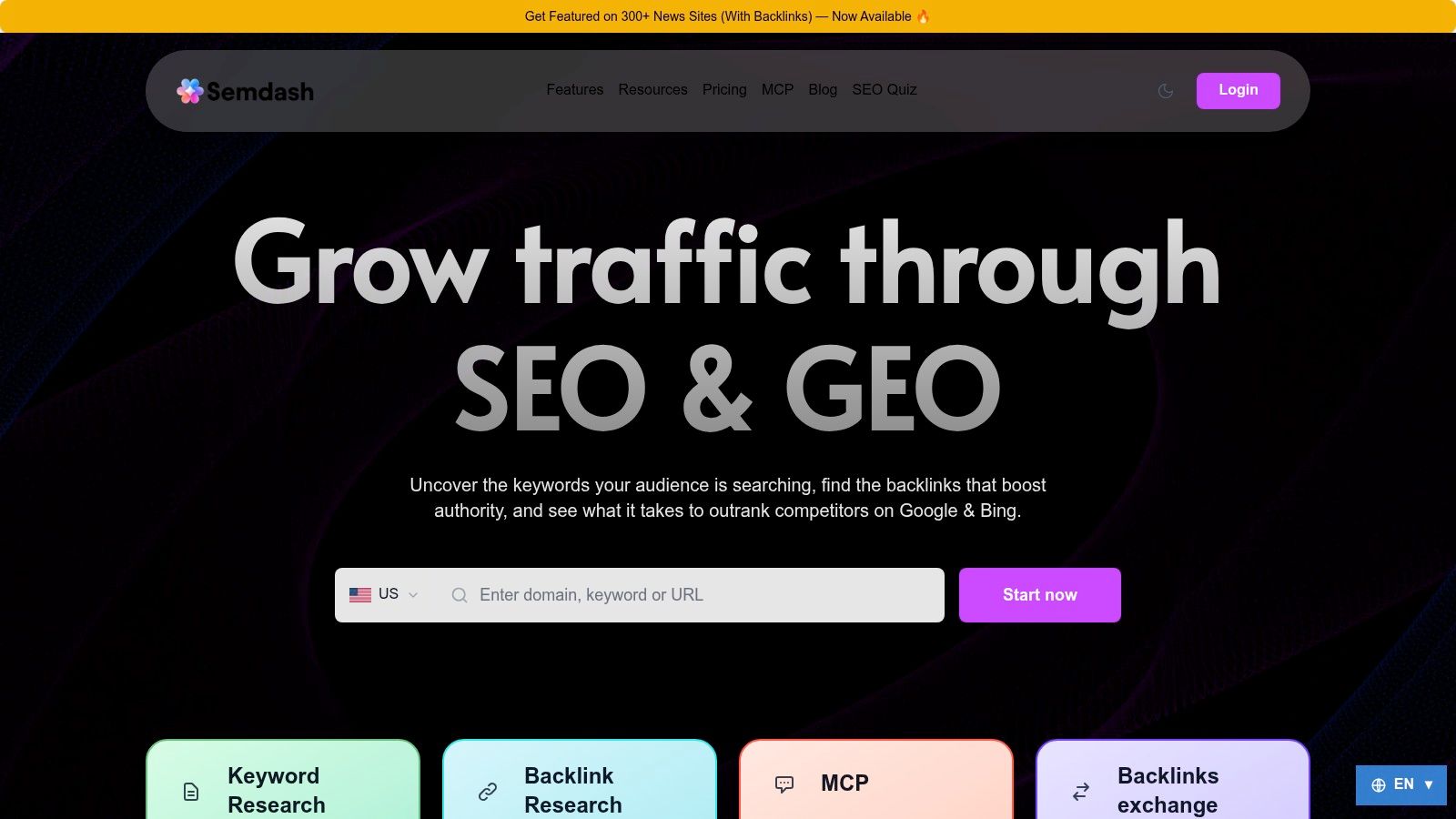
A large keyword database can still miss the queries that matter to your business. I'd evaluate SemDash by testing it against a fixed set of real market searches, then checking whether its competitor and page-level research helps me make a better content decision.
SemDash combines Google and Bing keyword research, backlink analysis, competitor comparisons, and SERP tracking. The company reports datasets of 6.6 billion Google keywords, 2.7 trillion backlinks, and 600 million SERPs. Those figures describe database scale, not coverage quality for a specific niche.
How I'd use it
I'd begin with Competitor Domains, Traffic Share, and Top Pages, then inspect the ranking URLs behind relevant searches. Traffic share is modeled opportunity, not a record of visits. I've made the mistake of comparing it with my own analytics as if both measured the same thing. They don't.
Next, I'd use Keyword Gap to find missing topics and clustering to decide whether related queries belong on an existing page or need their own destination. For content work, SemDash offers long-tail suggestions, People Also Ask and People Also Search results, intent classification, and AI-assisted briefs based on live SERPs. I'd check the results myself when informational and product-led intent overlap.
- Strong fit: Researching keywords, backlinks, competitors, and ranking URLs in one workflow.
- AI visibility: Google AI Overviews tracking shows domain mentions and cited URLs. MCP supports natural-language research through Claude or ChatGPT.
- Recovery work: Unlinked-mention and broken-backlink analysis can surface references to investigate.
- Trade-offs: Check current prices and plan limits. Some users report narrower keyword results than Ahrefs, while others request multi-domain analysis.
A free trial, SEO Academy, YouTube tutorials, live calls, and a public roadmap give teams ways to evaluate the product. Customer feedback mentions speed, simplicity, and value, but I'd test those claims against my own recurring tasks.
I'd assess the optional news-placement service separately from the software. Editorial research and paid distribution serve different purposes, and placements only count as visibility gains if their relevance and results hold up.
2. Semrush
Semrush's broad toolkit can save time, but a single visibility score can hide what matters. I'd use it to connect competitor research with rank tracking, backlink analysis, technical audits, and related marketing work, then report visibility, traffic share, and SERP coverage separately.
I made the mistake of treating share of voice as a proxy for traffic. A site can gain visibility across low-volume terms while losing clicks on commercial queries. I'd split tracking into branded, commercial, and informational cohorts, then compare like with like over time.
For AI Overviews, I'd inspect which tracked queries trigger them and whether my pages appear in the results. Coverage is useful context, not a traffic forecast. I'd compare it with Search Console clicks and landing-page performance rather than roll it into one score.
Where I'd watch the scope
Semrush's project tracking and reporting can support recurring reviews, while content optimization and AI visibility depend on the specific products and plan. I'd confirm what is included before building a workflow around those features.
- What works: Competitor discovery, tracking, and audit tasks can sit within one account.
- What needs discipline: Select the modules the team will use and define separate keyword cohorts.
- What I'd verify: Keyword allowances, project limits, reporting access, and add-on costs.
Agencies may value the range; solo operators focused on ranking URLs and a short opportunity list may prefer a narrower setup. Compare Semrush alternatives for different SEO workflows antes de comprometerte.
For a trial, I'd pick a competitor page, review its keyword coverage and SERP features, then turn the findings into an update brief. If that task takes too many steps, I'd choose a tool better matched to the team's routine.
3. Ahrefs
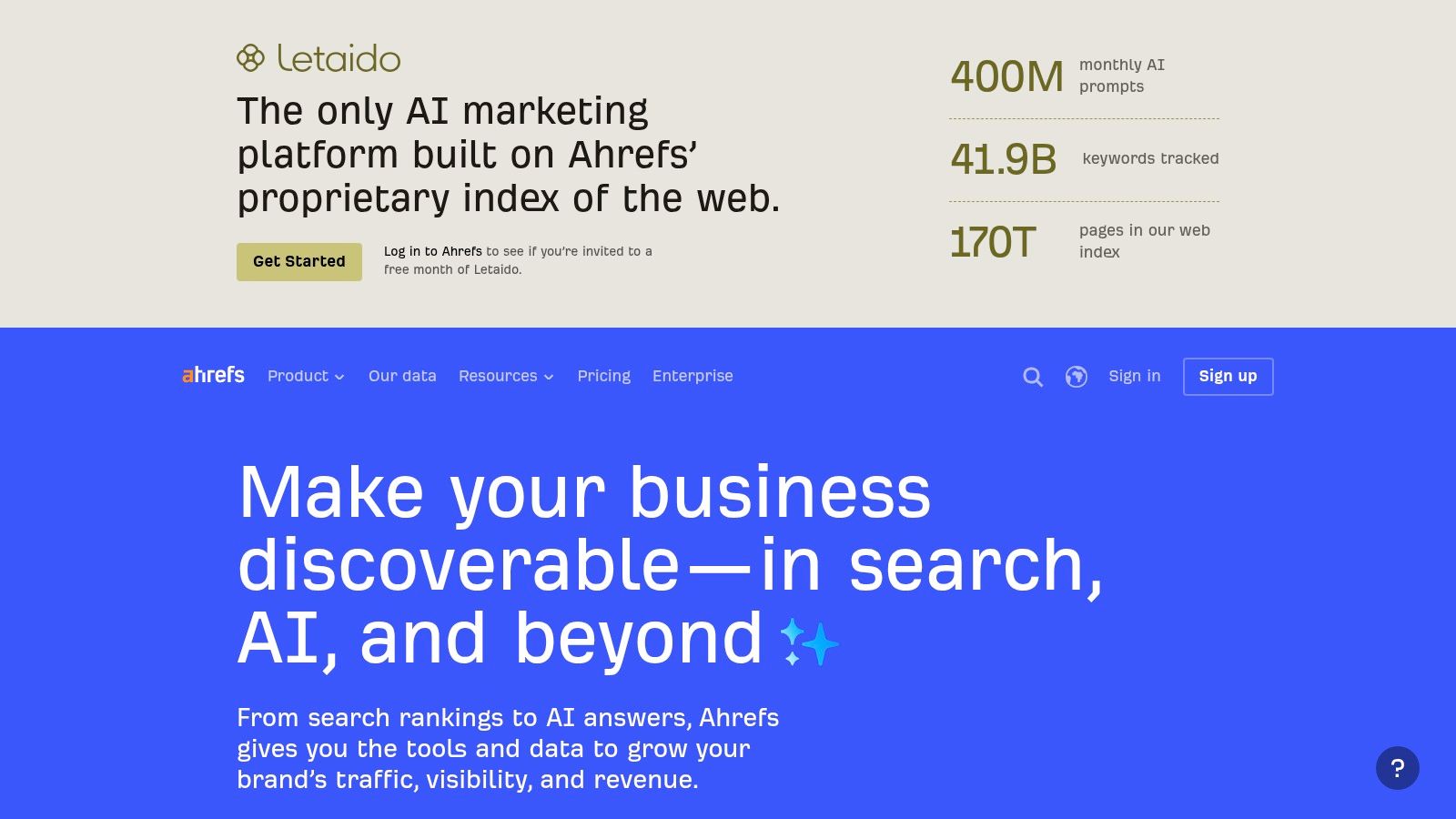
A visibility score can rise while organic visits fall. Ahrefs is useful for investigating why: it combines rank tracking with competitor-page, keyword, backlink, and site research. I'd use it to connect movement in search results to the pages and links behind that movement, then compare those signals with Search Console clicks.
For a hands-on check, I'd select a competitor page targeting the same topic and intent as one of my own. In Site Explorer, I'd review its estimated organic keywords and referring domains, then check whether those keywords rank in SERPs with AI Overviews. That separates ranking presence from traffic share: a page can cover many queries yet attract fewer clicks when search features answer more of the query on the results page.
I made the mistake of treating a growing share of tracked keywords as growing share of voice. The measure changed when I added broad informational queries, even though our commercial rankings had not improved. I now keep branded, commercial, and informational cohorts separate, and compare like with like over time. Ahrefs can support that analysis, but estimated traffic is not a substitute for visits recorded on my own site.
Use SERP coverage to interpret visibility
Ahrefs' research on AI Overviews and click-through rate reported a 58% lower average CTR for top-ranking pages when an AI Overview appeared, compared with the pre-AI-Overview baseline. I'd treat that as a reason to inspect the SERP, not as a prediction for a particular site. Search Console clicks, Ahrefs' visibility indicators, and observed SERP features answer different questions; none should stand in for the others.
- Mejor opción: Investigating competitor pages, backlinks, and keyword coverage in one workflow.
- Access: Some tools have limited free access; paid features and usage allowances depend on the tier.
- Trade-off: Its research depth is harder to justify if the job is only to monitor a small keyword set.
I'd trial the workflow on a page that matters commercially and ask whether the tool helps explain a change in rankings, SERP coverage, and actual clicks. For a narrower research setup, compare Ahrefs alternatives for different SEO workflows before choosing.
4. SE Ranking
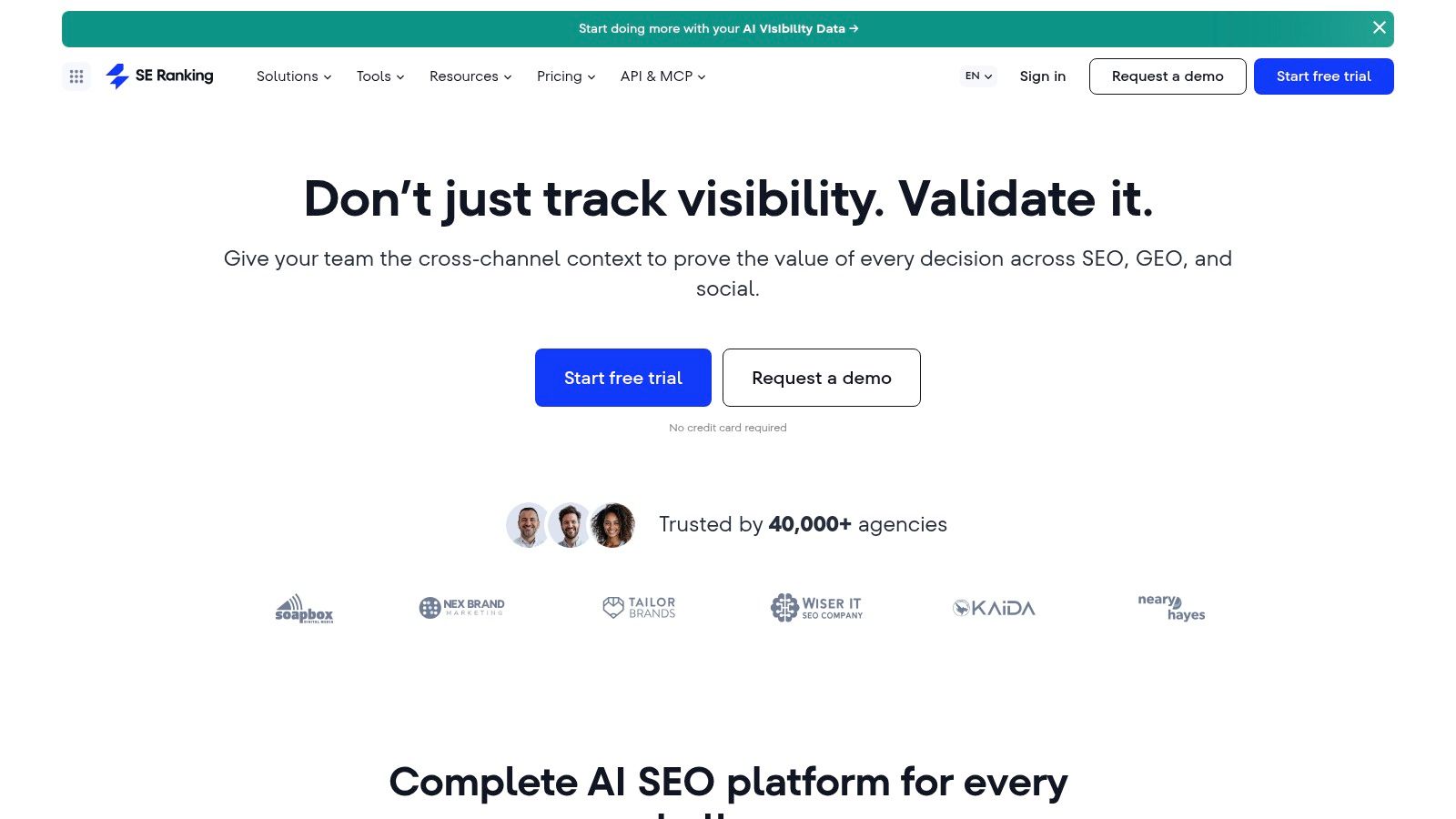
A visibility score can look healthy while a site loses traffic share or disappears from key SERP features. I'd use Clasificación SE to compare tracked rankings and SERP coverage, then check those signals against Search Console clicks and impressions. Its rank tracking, keyword and competitor research, backlink monitoring, website audits, on-page checks, content tools, and local SEO support that workflow.
I've made the mistake of treating a rising share-of-voice score as proof that search performance improved. The score can move because the tracked keyword set or competitor set changed, while actual clicks fall. I'd keep those inputs consistent and separate visibility scores, estimated traffic share, and coverage in features such as AI Overviews in client reports.
For a representative test, I'd track a commercially important page, a local query group, and a competitor. Then I'd check whether the report connects ranking changes to the intended landing page and audit findings, rather than stopping at average position.
- Tracking setup: Group queries by service, product category, location, and intent.
- Diagnosis: Compare rank movement with the landing page and relevant audit findings.
- Client delivery: Test reporting, agency add-ons, and API options against the actual workflow.
Test the reporting workload
SE Ranking offers a 14-day free trial. I'd use it to build a sample project and test whether the reports explain what changed and what action to take. Breadth can reduce the need to switch between tools, but it adds setup work: query labels, ownership, and reporting conventions need to stay consistent.
Before importing a full keyword list, I'd check pricing, usage allowances, and optional features against the expected workload. I'd also confirm whether its AI-search reporting tracks the coverage I need; conventional rank tracking alone doesn't establish citation visibility.
5. Moz Pro
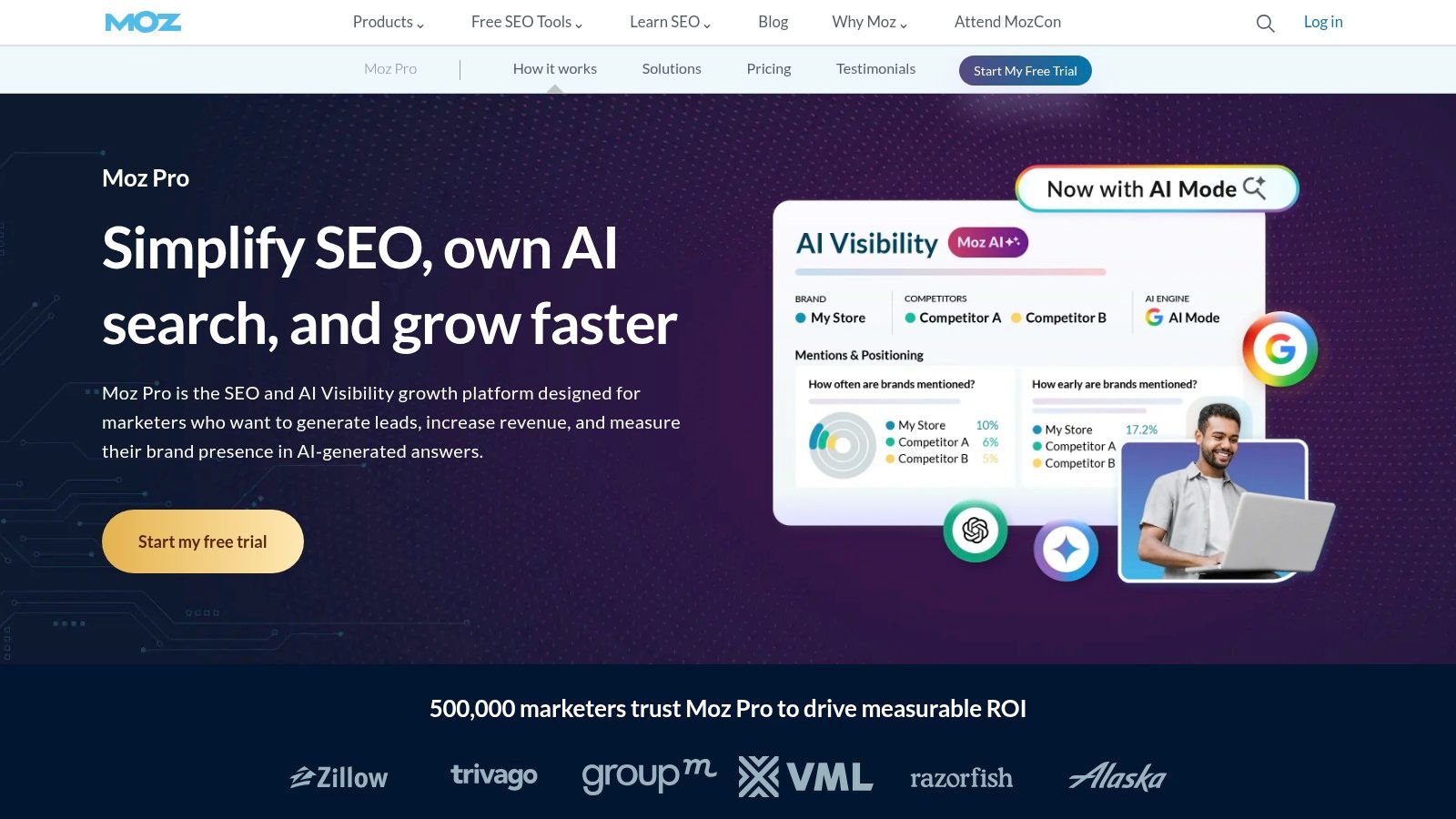
The distinction I'd establish immediately with Moz Pro is between authority metrics and search performance. Domain Authority is Moz's proprietary metric, not a Google ranking factor, and I wouldn't present an increase as evidence that my pages earned more clicks.
I'd use its keyword research, rank tracking, crawling, and Link Explorer together. Link Explorer can help compare backlink profiles, while crawl findings help identify issues that deserve technical investigation.
Keep the metrics in their lanes
For a page losing visibility, I'd inspect the ranking query, intended URL, and technical condition before looking for a domain-level explanation. A proprietary authority score can provide research context, but it can't tell me whether the wrong page ranks for a purchase-intent query.
I wouldn't make an authority score the success metric for work intended to improve qualified organic traffic.
- What I'd use: Core SEO research, backlink comparisons, and crawl-based issue discovery.
- What helps adoption: Educational resources for colleagues learning the terminology.
- What I'd check: Site and keyword allowances, pricing, and how each proprietary metric is defined.
Moz Pro would make sense for my shortlist when I want a core SEO toolkit and a consistent vocabulary for competitor comparisons. I'd be more cautious if the main requirement were detailed AI-answer citation analysis.
I wouldn't compare Moz's authority score numerically with another vendor's score. I'd compare the actual pages, relevant links, ranking coverage, and measured outcomes instead.
6. Mangools
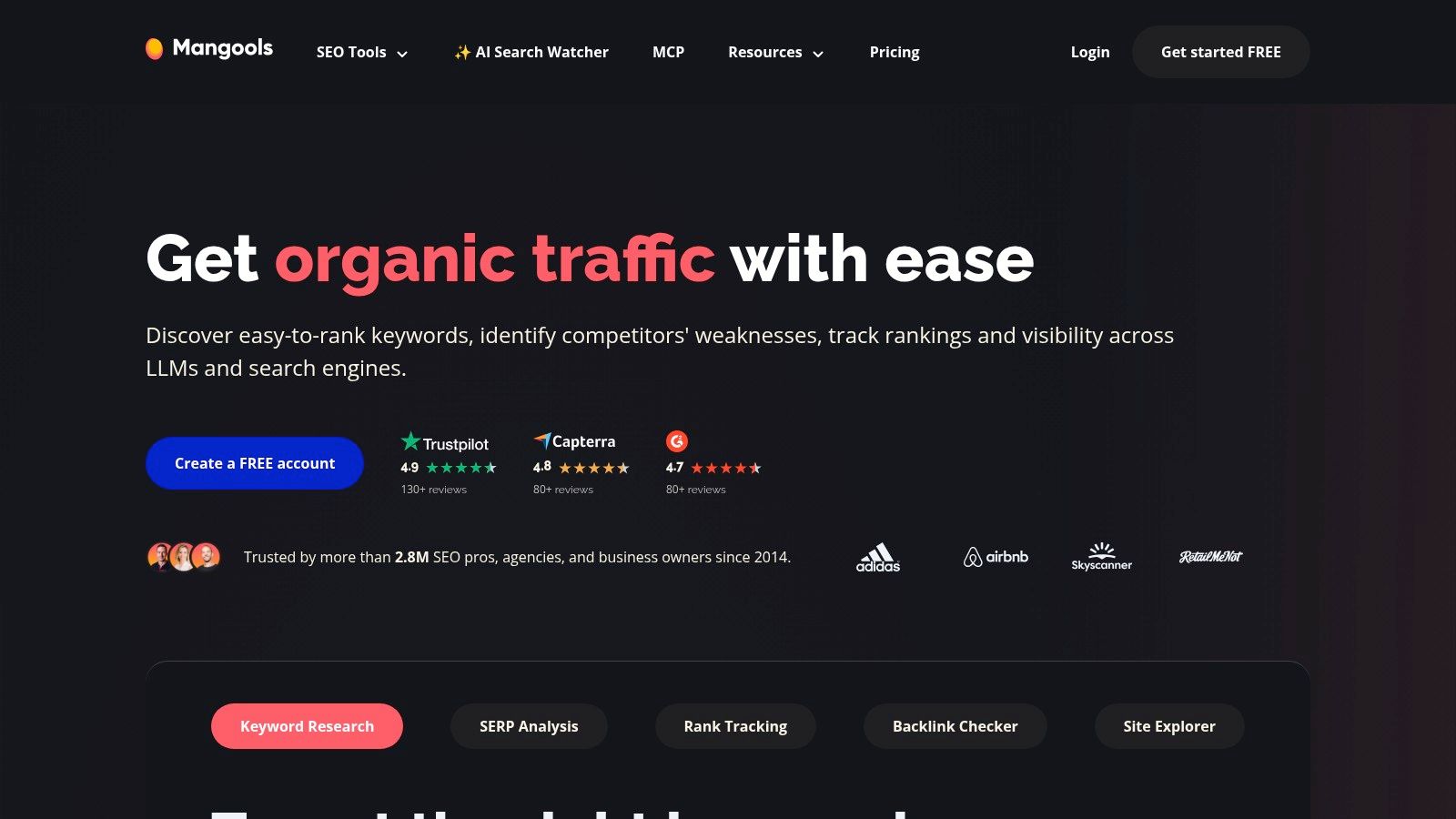
If I'm running a small content operation, I don't necessarily want an enterprise-style workspace. Mangools divides common tasks among KWFinder, SERPChecker, SERPWatcher, LinkMiner, and SiteProfiler, which makes the research sequence straightforward to evaluate.
I'd begin in KWFinder with a topic I can credibly cover, inspect the results in SERPChecker, then track the selected queries in SERPWatcher. LinkMiner and SiteProfiler would support the backlink and domain investigation when needed.
- Keyword discovery: I'd use long-tail suggestions to find specific audience questions.
- SERP inspection: I'd check whether the results favor guides, product pages, comparisons, or another format.
- Tracking: I'd monitor a curated query set rather than every variation returned during research.
Simplicity still needs measurement discipline
A focused toolset doesn't remove the need to distinguish ranking improvements from useful traffic. For example, I'd keep a product-comparison query separate from a general definition query even if both belong to the same topic cluster.
The attraction is lower workflow complexity for solo marketers, bloggers, and smaller teams. The trade-off is that I'd need to examine research quotas, tracking allowances, exports, and reporting requirements carefully before using it across a larger operation.
I wouldn't assume the bundle replaces dedicated AI-citation monitoring or extensive enterprise reporting. My decision would depend on whether I need those capabilities now, rather than buying for a hypothetical future workflow.
For a focused content program, I'd favor a tool I can use consistently over a broader suite I rarely open.
7. Serpstat
My first question for Serpstat would be about the plan, not the headline feature list. Keyword and domain research, rank tracking, backlink analysis, audits, and competitor research cover the core workflow, while AI-visibility checks and collaboration depend on the applicable tier.
I'd write down the actual workload before comparing subscriptions. That includes research searches, audit pages, exports, reporting needs, and who needs access.
Buy the workflow you'll run
For an agency, I'd test a client handoff from discovery through reporting. I'd investigate a competing domain, identify relevant missing topics, inspect destination pages, and check whether I can share the resulting recommendations without manual reconstruction.
- Useful coverage: Core research and tracking in a consolidated platform.
- Team consideration: Reporting, collaboration, and AI-visibility capabilities vary across plans.
- Practical constraint: Daily searches, audit capacity, and export allowances can affect routine work.
For AI reporting, I'd also ask what the tool counts. A brand mention, a linked citation, and a cited URL are different observations, so I wouldn't accept a single inclusion total without understanding the underlying records.
Serpstat would earn a place on my shortlist if its published allowances match my recurring workload. I'd be less persuaded by access to a feature I can only use too sparingly to establish a reliable baseline.
The key comparison is whether the selected plan supports the same research process repeatedly, not whether the product menu contains every term I'm looking for.
8. SpyFu
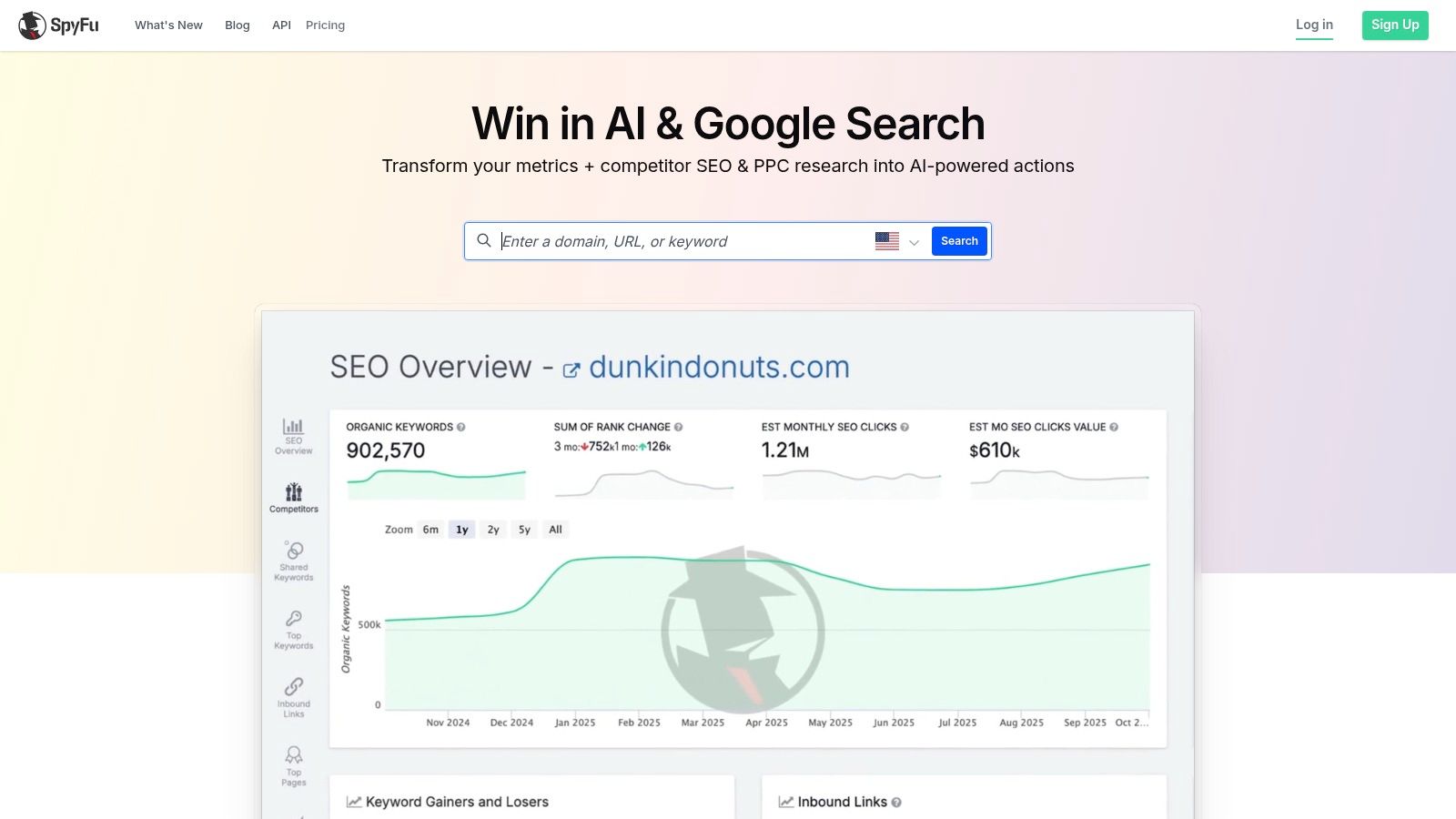
I'd reach for SpyFu when organic visibility and competitor advertising need to inform the same decision. Its emphasis on domain research, organic and paid keywords, and historical advertising activity makes it a different proposition from a technical SEO suite.
For a commercial query, I'd investigate the competing domains, inspect their organic destinations, and review relevant advertising activity. I'd use that combination to generate hypotheses about search intent and messaging, not to infer profitability.
Buying caution: A competitor's advertising activity isn't proof that the keyword converts profitably.
Where I'd use a second tool
SpyFu also offers rank tracking, backlink research, and exports, with access depending on the plan. A free version provides a way to explore the product before deciding whether the available research fits.
- Strong use case: Competitor keyword and search-ad investigation.
- Plan checks: Historical access, search allowances, and export limits.
- Likely complement: Another platform for detailed technical audits or advanced content workflows.
My practical test would be to investigate a specific product category and turn the findings into an organic-versus-paid opportunity note. I'd keep estimated competitor visibility separate from my own conversion data throughout.
I wouldn't choose SpyFu primarily to diagnose indexing issues or measure detailed AI Overview citation coverage. I'd choose it when understanding competitor search strategy is the immediate problem, then pair it with first-party reporting and whatever technical tooling the site requires.
That narrower role can be more useful than treating every search visibility tool as an all-purpose replacement.
9. Google Search Console
Google Search Console is where I'd validate my own Google Search performance. It's free, requires access to a verified property, and reports impressions, clicks, click-through rate, and position rather than competitor traffic estimates.
I'd filter by query and page before interpreting a change, then inspect country, date, and search appearance where relevant. A sitewide average can conceal a decline on the pages that matter most to the business.
My validation sequence
- Impressions changed: I'd investigate query coverage, page availability, and relevant search context.
- Clicks fell while impressions held: I'd examine CTR, query mix, and the live results.
- The wrong page appeared: I'd review intent alignment, internal links, and possible page overlap.
Before rewriting an apparently invisible page, I'd also check technical eligibility. Google's guidance for AI features explains that supporting pages must be indexed and eligible to appear in Search with a snippet; eligibility still doesn't guarantee inclusion.
That distinction prevents a content diagnosis from replacing an access or indexing diagnosis. I'd verify the page's technical state before deciding that a topic lacks demand or a competitor has better copy.
Search Console doesn't replace competitor keyword research, backlink investigation, or dedicated citation tracking. It gives me the first-party reference point I need to challenge third-party estimates.
I'd use it alongside a research platform, not ask either source to answer questions outside its scope.
10. BrightEdge
With BrightEdge, I'd evaluate organizational fit before feature breadth. Its enterprise positioning covers keyword research, ranking and page-speed insights, technical auditing, dashboards, and search and AI-visibility capabilities for larger SEO programs.
The question I'd bring to a demo is practical: can my content, technical, and reporting teams work from compatible evidence without losing the page-level detail? I'd want an executive summary that still lets me investigate the query and URL behind a movement.
- Enterprise fit: Large websites and complex search programs.
- Reporting value: Dashboards for communicating performance across teams.
- Adoption support: Demos and customer support around platform use.
- Buying friction: Pricing isn't publicly listed, so I'd need a quote and a clear scope.
What I'd ask to see
I'd supply a representative section of the site and ask for an end-to-end demonstration. That means identifying an opportunity, inspecting the supporting evidence, documenting a recommendation, and showing how I'd measure the result.
For AI-search reporting, I'd request the exact distinction between brand visibility, source citation, and cited-page coverage. I'd also ask how observations are dated so I can separate a content change from a changing results layout.
For an individual consultant or small business, I'd expect the enterprise scope to be difficult to justify unless the workflow requires it. For a larger team, I'd judge the purchase by reporting clarity, implementation demands, and whether colleagues can act on the findings.
Top 10 Search Visibility Tools: Feature Comparison
| SEO Platform | Core Capabilities | Standout Strength | Mejor para | Precio y valor |
|---|---|---|---|---|
| 🏆 SemDash | Keywords, backlinks, competitor gaps, SERP history, AI briefs | ✨ 6.6B keywords, 2.7T-link index, URL-level data, AI Overviews tracking | 👥 SEO teams and marketers planning content and competitor research | 💰 Free trial; exact subscription pricing not provided |
| Semrush | SEO research, audits, rank tracking, content tools | Broad SEO and digital-marketing toolkit | 👥 Agencies and teams needing varied workflows | 💰 Plan limits and add-ons can affect total cost |
| Ahrefs | Keyword, backlink, competitor, audit, and rank research | Strong backlink and competitor analysis | 👥 SEO practitioners focused on links and competitor pages | 💰 Limited free access; paid allowances vary by tier |
| Clasificación SE | Rank tracking, research, audits, backlinks, local SEO | ✨ Agency add-ons and API options | 👥 Agencies, consultants, and in-house teams | 💰 14-day trial; assess plan limits and add-ons |
| Moz Pro | Keyword and rank tracking, link research, site crawling | ✨ Link Explorer and proprietary Domain Authority metric | 👥 Teams seeking core SEO research and tracking | 💰 Check plan limits for sites and keywords |
| Mangools | Keyword, SERP, rank, backlink, and domain tools | ✨ Focused tools with a simpler workflow | 👥 Bloggers, solo marketers, and small teams | 💰 Plan quotas apply; compare limits for larger workloads |
| Serpstat | Keyword and domain research, rank tracking, audits, backlinks | ✨ AI-visibility checks and collaboration on select plans | 👥 Freelancers and agencies | 💰 Tiered plans; higher limits require higher tiers |
| SpyFu | Competitor keyword, organic, and paid-search research | ✨ Historical competitor and advertising data | 👥 SEO and PPC teams researching rivals | 💰 Free version; access and export limits vary by plan |
| Google Search Console | Google clicks, impressions, queries, indexing reports | ✨ First-party performance data for verified sites | 👥 Site owners validating their own search performance | 💰 Free |
| BrightEdge | Enterprise research, technical audits, dashboards, AI-search visibility | ✨ Reporting for complex, large-scale SEO programs | 👥 Large organizations and enterprise SEO teams | 💰 Quote-based; pricing not publicly listed |
How I Would Pick and Track Visibility Next
A visibility score can rise while traffic falls. I learned that the hard way by expanding a tracked keyword set, then treating the higher share-of-voice figure as growth. The new terms changed the denominator, so the score no longer compared like with like.
I'd choose a tool based on the decisions it supports, then keep three measurements separate:
- Visibility score summarizes tracked rankings using the platform's calculation. It's useful for spotting movement in a fixed keyword set, but scores from different tools may not be comparable.
- La cuota de tráfico measures a site's share of estimated or actual organic visits. Search Console provides actual Google clicks for a verified site; third-party estimates help compare competitors but are not first-party traffic data.
- SERP and AI Overviews coverage records where a brand or URL appears, including features and citations. Presence does not prove a visit or conversion.
For solo work, I'd test SemDash or Mangools on a topic cluster I know well. For a team, I'd compare SemDash, Semrush, Ahrefs, and SE Ranking using the same research and reporting tasks. BrightEdge may fit when enterprise coordination and reporting needs justify its scope.
Keep share of voice comparable
Before tracking, I'd freeze the keyword set, competitors, search engines, locations, devices, intent groups, and target landing pages. If a new category matters, I'd report it as a separate cohort rather than adding its terms to the original set.
I'd also separate brand mentions from linked citations, and both from downstream action. A company name in an AI answer does not show that its site received a visit. A cited URL does not show that a visitor converted.
AI Overview coverage can shift over time. Search Engine Land's analysis of Google AI Overview prevalence reported coverage rising from approximately 6.5% of queries in January 2025 a just under 25% in July, then falling below 16% by November. I'd save dated observations and avoid treating a single snapshot as a stable baseline.
Turn the baseline into a page decision
For each priority query group, I'd record the intended URL, ranking URL, SERP features, citation status, and Search Console performance. When those signals disagree, inspect the query and page before changing the content. The right next step could be a technical fix, a stronger page, a different format, or no change.
A content gap analysis framework can help turn missing coverage into a focused page plan. I'd prioritize gaps with a clear search intent, a useful destination, and evidence the page can add, rather than building a backlog of loosely related articles.
Then I'd run the same representative queries through the shortlisted tools. I'd keep the one that makes its evidence easy to inspect and clarifies what to do next. SemDash includes URL-level rank tracking and AI Overviews citation tracking alongside keyword, backlink, competitor, and SERP research.