Adding AI to an SEO platform doesn't automatically produce better rankings, stronger content, or sounder recommendations. I've seen tools turn a straightforward content decision into a long queue of low-value tasks because they optimized for activity rather than the actual constraint.
The useful question is narrower: which workflow does the tool improve? Competitor research, intent classification from live SERPs, page-level briefs, editorial optimization, AI citation monitoring, reporting, or content production all need different data and controls. A tool that's excellent for drafting may be poor at backlink discovery, while a strong rank tracker may tell you little about whether Google's AI systems cite your pages.
I evaluate SEO tools with AI against four practical tests: data quality, implementation effort, user control, and failure modes. I also look for a clean handoff to the next system. A brief should become a page, a competitor gap should become a prioritized target, and an AI visibility report should identify the cited URL rather than merely display a score.
That matters as search becomes increasingly AI-mediated. My broader view on AI optimization vs traditional SEO is that the two disciplines overlap, but they don't produce identical workflows. The list below focuses on where each tool earns its place, where it needs support, and where buying another subscription would create more overlap than value.
Tabla de contenido
- 1. SemDash
- 2. Semrush
- 3. Ahrefs
- 4. Surfer
- 5. Frase
- 6. MarketMuse
- 7. SE Ranking
- 8. Clearscope
- 9. Jasper
- 10. Moz Pro
- Top 10 AI-Powered SEO Tools Comparison
- Choose the Workflow Before the Tool
1. SemDash
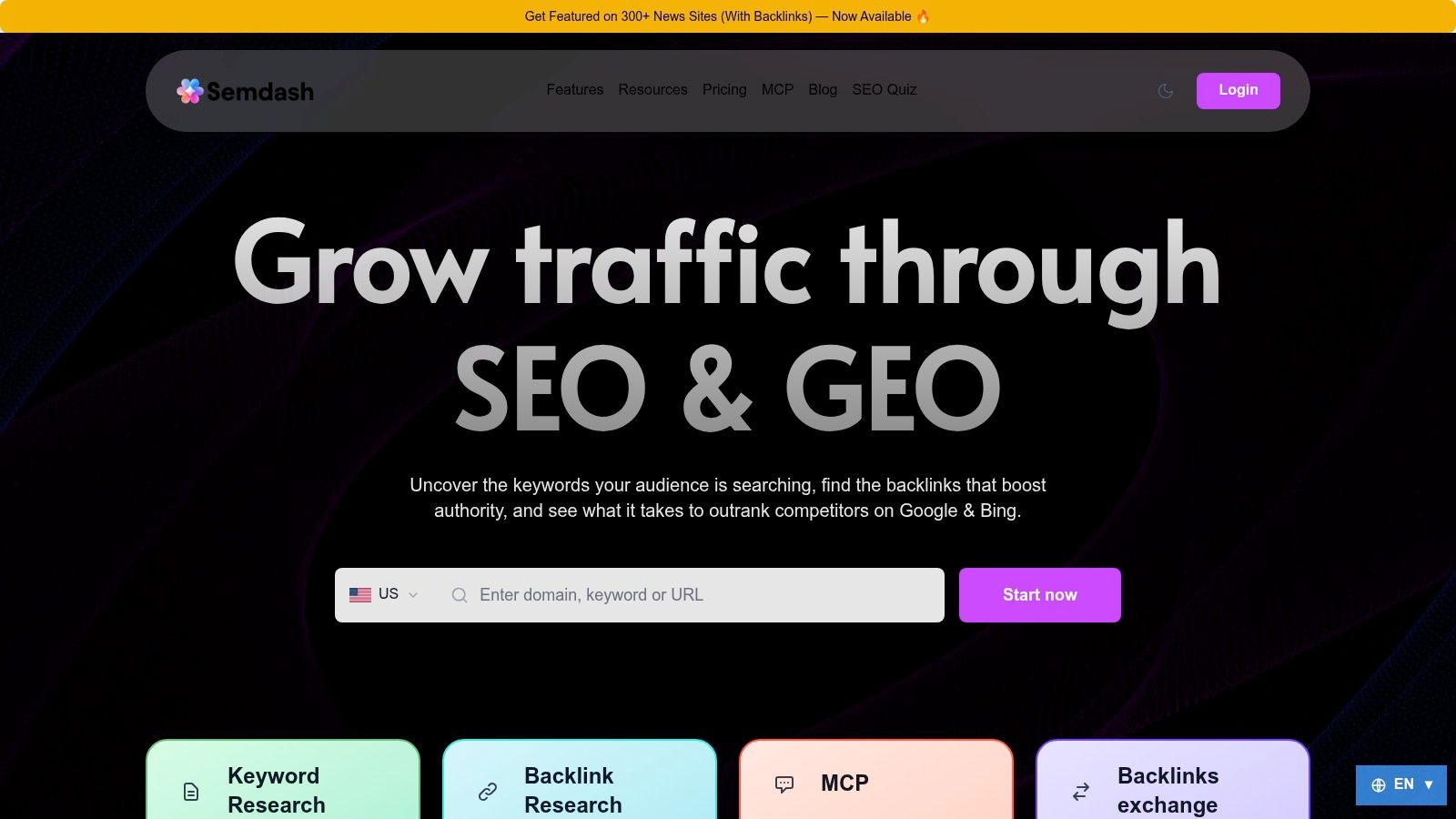
SemDash is the strongest fit here when the bottleneck is turning competitor research into specific pages, keywords, and link actions. I use that workflow before content production, not after. Domain Keywords and Keyword Gap reports show the terms competitors receive traffic from, while URL-level mapping identifies the precise page associated with each keyword. That distinction prevents a common mistake, targeting a broad topic without understanding which page type already satisfies the SERP.
The platform combines a 6.6 billion-keyword Google database, a 2.7 trillion-link backlink index, and 600 million SERPs, according to SemDash's product information. Those datasets support practical tasks such as competitor reverse-engineering, backlink gap analysis, broken-link recovery, unlinked-mention discovery, and page updates based on historical SERP changes. The Historial de SERP de 12 meses is particularly useful when intent has shifted or a previously stable result set has become volatile.
SemDash also moves beyond generic AI writing. Its AI-assisted briefs use live SERP signals, keyword clustering reduces cannibalization risk, and its AI Overviews workflow can show which queries trigger domain mentions and the exact URLs cited. That's much closer to an operational question than “can AI write an article?” I want to know which page is being selected, which query caused the selection, and whether that visibility changes over time.
Dónde SemDash funciona mejor
- Competitor discovery: Map traffic share, top pages, ranking keywords, and content gaps in one research flow.
- Link acquisition: Find domains linking to competitors but not to you, then inspect referring pages and anchor context before outreach.
- Content planning: Cluster related queries into page-level topics and use People Also Ask and People Also Search data to expand coverage without creating overlapping pages.
- AI-era analysis: Connect keyword opportunities with AI Overviews mentions and URL-level citation discovery.
The trade-off is that exact plan limits and enterprise pricing need confirmation, because detailed public pricing tiers aren't displayed on the product page. Some power users may also find smaller keyword pulls than top-tier competitors in certain domains, and bulk multi-domain analysis may be limited. For agencies that need exhaustive exports across many properties, that matters. For specialists, small businesses, and growth teams that value speed, clean UX, actionable reports, and a lower-complexity workspace, the product is a practical starting point.
Regla práctica: Use SemDash to decide which page deserves work, then use a specialist editor or writing platform only when the production workflow needs deeper controls.
2. Semrush
Semrush makes the most sense for teams that want traditional SEO research and AI visibility in one established workspace. I'd use it when the same team needs keyword research, site auditing, rank tracking, competitor analysis, and monitoring across Google AI Overviews, Google AI Mode, ChatGPT, Perplexity, and Gemini.
The workflow is familiar: identify a target set of queries, inspect competing domains, audit the site, track organic positions, and then add AI visibility monitoring to see how the brand appears in generated answers. Prompt tracking, sentiment monitoring, and visibility reports can help a team move from anecdotal checks to a repeatable monitoring process. AI-generated report summaries are useful for stakeholder communication, but I wouldn't let them replace the underlying query and URL review.
The trade-off is expansion cost
Semrush has a clear scaling path from Starter through higher plans, but tracked prompts, users, historical data, MCP access, and competitor Share of Voice can require higher tiers or additional spending. Share of Voice is limited to the top tier in the supplied product plan, so teams should test the exact reporting they need before assuming the base subscription covers it.
I'd choose Semrush when adoption, breadth, and a mature dataset matter more than a tightly focused research interface. I wouldn't buy it solely for AI writing. Its value comes from connecting established SEO workflows with AI visibility, not from generating another interchangeable draft.
3. Ahrefs
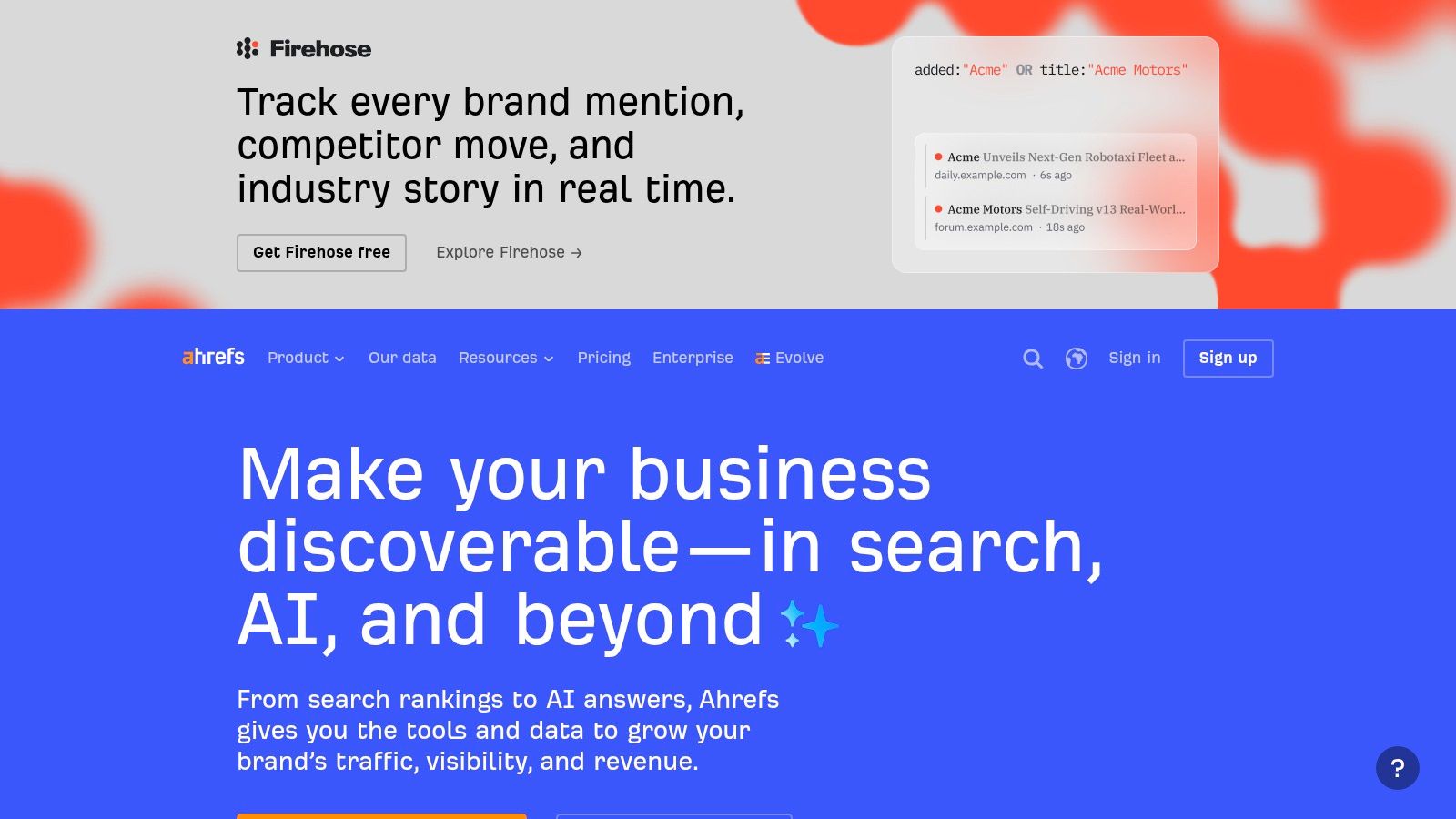
Ahrefs remains a strong choice when backlinks, keyword data, crawling, and API access sit at the center of the workflow. Its newer AI capabilities add tracked AI prompts, Brand Radar, AI suggestions, keyword clusters, and search intent in Keywords Explorer. That makes it useful for teams that already trust its research environment and want to add AI monitoring without changing platforms.
My preferred Ahrefs workflow starts with backlink and keyword discovery, moves into a site crawl, and then uses prompt tracking to check whether brand visibility is developing in AI search. Project Boost and Max features, including “Ask AI in Site Audit” and instant recrawl options, can reduce the time between identifying a technical issue and investigating it. The API and MCP/server access also matter for teams building internal dashboards or connecting SEO data to reporting systems.
What I'd verify before committing
Ahrefs' default rank updates are weekly, while daily monitoring requires a different workflow. That can be adequate for strategic reporting, but it's less comfortable when a launch, migration, or volatile SERP needs close observation. Brand Radar and some AI capabilities are paid add-ons, so the advertised platform breadth doesn't necessarily equal the functionality included in the initial plan.
Ahrefs is best when link intelligence is the anchor and AI tracking is an extension. If the primary requirement is page-level AI Overview citation discovery or fast competitor-to-brief execution, I'd compare it with SemDash and test the actual handoff from research to content planning.
4. Surfer
Surfer is built around content optimization, so it's most useful when the team already knows which pages to create or update and needs editorial guidance during production. Its Content Editor can compare a draft with current SERP patterns, while the AI Tracker monitors brand visibility across ChatGPT, Perplexity, Google AI Mode, Google AI Overviews, and Gemini.
I like the separation between the content editor and AI visibility work because they answer different questions. The editor helps assess topical and on-page coverage. AI Tracker helps determine whether the brand appears in generated answers, how visibility compares with competitors, whether mentions carry positive or negative sentiment, and where a mention gap exists. Daily refreshes, CSV export, shareable links, and five included seats make the reporting workflow practical for client and stakeholder review.
Where it needs another system
Surfer doesn't replace deep backlink analysis or technical SEO research. I'd pair it with SemDash, Ahrefs, Semrush, or another link and crawl platform when the content recommendation depends on authority, competitor referring domains, or site architecture.
The main purchasing detail is structural: AI Tracker is separate from the full Surfer content plans. That's useful for a team that only needs visibility monitoring, but it can also create confusion if buyers assume the complete Surfer toolkit is included. I'd run a representative set of prompts, export the findings, and then check whether the content editor changes the editorial decision. If the team only uses the score and ignores intent, the subscription becomes an expensive drafting checklist.
5. Frase
Frase is strongest at the research-to-publish path. It researches current results, supports AI-assisted drafting in a chosen brand voice, scores content live, suggests internal links, and connects with WordPress, Webflow, Sanity, and Wix. For a content team that has already chosen the topic and wants fewer handoffs between brief, draft, optimization, and publishing, that combination is useful.
I'd use Frase to build an initial brief from the live SERP, draft only the sections where the writer needs help, and then review the output against the searcher's actual question. Its Content Guard adds a post-publish layer by detecting ranking decay and proposing fixes. That's more valuable than a one-time content score because pages need maintenance when competitors change their coverage or the SERP intent moves.
The limitation is research depth
Frase's keyword and backlink data is lighter than what I'd expect from a large all-in-one SEO suite. It can help a writer produce and maintain a page, but it shouldn't be the only system used to select a market opportunity, evaluate a competitor's link profile, or prioritize authority-building work.
Content limits are clearly structured, with monthly article, audit, and prompt allowances, plus optional pay-as-you-go usage. AI visibility coverage expands by tier, and historical depth also increases on higher plans. Before buying, I'd confirm the engines and history needed for client reporting.
For a broader content workflow, I'd compare its production features with this guide to SEO tools for content marketing. Frase is a sensible complement to SemDash when SemDash identifies the opportunity and Frase helps the editorial team ship and maintain the page.
6. MarketMuse
MarketMuse is for teams that plan at the topic-cluster and editorial-roadmap level, rather than handling one isolated keyword at a time. Its topic modeling, Content Inventory, SERP X-ray, heatmaps, Optimize module, and machine-generated briefs help answer a larger planning question: which subjects should the team cover, update, consolidate, or deprioritize?
I'd use the Content Inventory to organize tracked topics and then apply personalized difficulty and prioritization metrics before assigning work. The brief types support different page formats, including articles, comparisons, and FAQs. That matters because a comparison page shouldn't inherit the same structure as a definition or informational guide.
A better fit for strategic teams
MarketMuse reduces research time when editors manage a large library and need a defensible roadmap. Its proprietary topic modeling can expose missing concepts and relationships that a simple keyword list won't show. The Optimize module then gives writers a way to inspect page coverage without treating a single score as the objective.
The drawback is commercial and data-related. Public list prices for paid tiers are no longer displayed, so buyers should expect a sales-assisted process. MarketMuse is also lighter on backlink data, which means a link-index tool remains necessary when authority, competitor link gaps, or outreach targets influence prioritization.
I'd avoid using MarketMuse as the only source of truth for opportunity selection. Pair its topic intelligence with live competitor pages, SERP intent, backlink evidence, and business value. Teams deciding between platforms can also use this comparison of best AI SEO software to frame the difference between editorial intelligence and broader SEO research.
7. SE Ranking
SE Ranking combines rank tracking with AI visibility measurement, which makes it a good fit for teams that don't want those workflows isolated. Its AI Results Tracker reports mentions, link or citation presence, Top-3 presence, and Organic-AI overlap for Google AI Overviews. The separate AI Search add-on expands limits in core plans, while SE Visible operates as a standalone visibility product.
The overlap metric is particularly useful because a page can rank organically without appearing in an AI answer, and an AI-cited source doesn't have to be the same result the team expects from conventional rank tracking. Google's citation layer deserves separate analysis. A large-scale study of 863,000 keywords and 4 million AI Overview URLs found that only 38% of cited pages also appeared in the top 10 organic results for the same query (Search Engine Journal). That's why I wouldn't use page-one rankings as a proxy for AI visibility.
Useful for reporting infrastructure
SE Ranking stands out when the team wants API access to AI visibility Share of Voice, mentions, and citations. Its documentation and quickstarts support custom dashboards, so agencies can connect AI Search endpoints to existing reporting rather than manually copying screenshots.
The main limitation is plan gating. Some AI features and limits depend on add-ons or tier, while advanced historical trends may require higher plans. I'd test the API response, history depth, and prompt capacity before building a client dashboard around it.
8. Clearscope
Clearscope is a focused choice for editorial teams that want a trusted optimization editor with emerging AI visibility monitoring, without adopting a large all-in-one platform. Its editor supports AI drafting and Topic Exploration, while Optimization scoring helps writers check topical coverage during production. Shareable drafts and Google Docs and Office 365 integrations fit teams where SEO review happens alongside existing editorial workflows.
Tracked Prompts add a separate AI-search layer. They're designed to monitor brand mentions and citations, which gives the team a way to inspect whether optimization work is influencing visibility beyond traditional rankings. I'd use that information as a monitoring signal, not as a direct publishing instruction. A prompt can expose a citation opportunity, but a writer still needs to verify the source, intent, and factual basis.
Budget for credits, not just seats
Clearscope uses a credit system for Drafts and Topic Exploration, and Content Inventory has page caps that vary by tier. That creates a practical planning issue for active content programs. A team can choose a plan that looks suitable by user count, then discover that research and drafting consumption limits the actual workflow.
Clearscope doesn't include a native backlink index, and its keyword research is lighter than an all-in-one suite. I'd pair it with SemDash or Ahrefs for competitor discovery, link gaps, URL mapping, and broader keyword research. Clearscope then stays focused on what it does well, helping editors improve and share pages without pretending to be the entire SEO stack.
9. Jasper
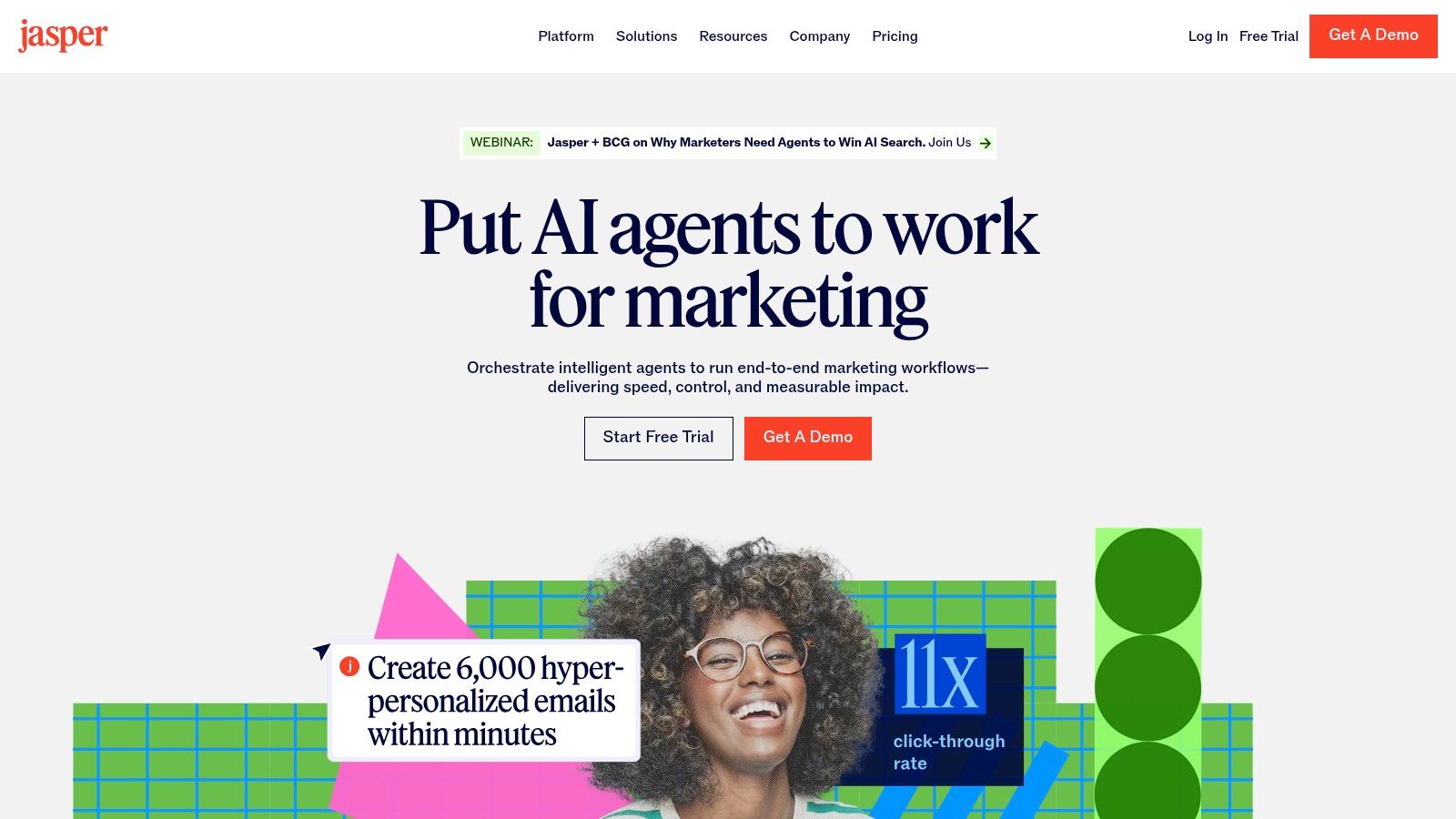
Jasper is a content production and governance platform, not a substitute for SEO research. I'd bring it into the workflow after a data tool has established the target query, intent, page type, entities, internal links, and evidence requirements. Its Canvas supports long-form drafting, brand voice, and knowledge assets, while Agents can handle repeatable marketing workflows and custom no-code agents on Business plans.
That separation is important. Jasper can help a team produce a consistent draft, repurpose a guide into other channels, support translations, and keep tone aligned across contributors. It can't independently tell you whether the opportunity is commercially relevant, whether the competitor page has stronger authority, or whether the query needs a new page rather than an update.
Use it to increase controlled production
A sensible handoff starts with a structured brief from SemDash, Semrush, Ahrefs, or a content intelligence platform. The writer then uses Jasper to develop sections, variations, and channel adaptations while retaining editorial responsibility for claims, examples, citations, and differentiation.
Extensions and browser integrations support in-place creation, and Business plans include enterprise security and governance features. Usage-based features on those plans consume credits, so high-volume teams need to model how many drafts, revisions, and agent runs their process will generate.
I wouldn't buy Jasper as the first SEO subscription. I'd buy it when the constraint is production velocity, brand consistency, or collaboration across a content operation. It works best as the writing layer in a stack that already has reliable SEO evidence.
10. Moz Pro
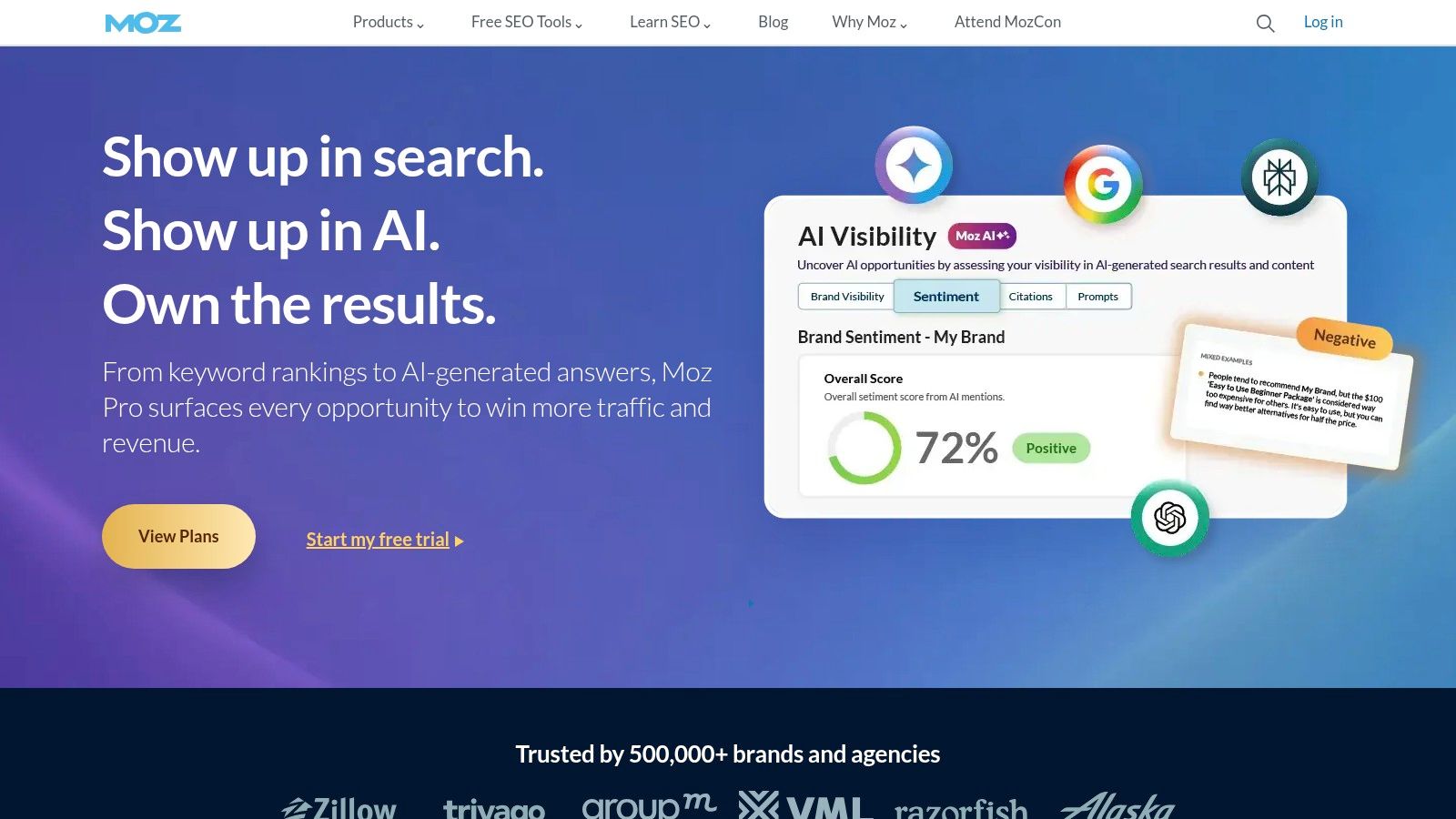
Moz Pro is a straightforward all-in-one option for teams that value keyword research, link research, site auditing, and rank tracking without needing the most advanced AI visibility layer. MozBar Premium adds in-SERP and on-page insights, which can be useful when reviewing competing pages directly in the search results.
Its Domain Authority and Page Authority metrics remain familiar shorthand for comparing link strength, although I treat them as directional inputs rather than ranking guarantees. The broader workflow is simple: find terms, inspect links, audit technical issues, monitor rankings, and use MozBar while examining pages and SERPs.
Where Moz Pro falls short for AI visibility
Moz references AI-assisted elements and evolving AI Search and GEO support in current materials, but its AI visibility feature set appears less mature than Semrush, Ahrefs, or SE Ranking for teams that need deep prompt and citation tracking. I'd expect to supplement it if the reporting requirement includes broad engine coverage, historical prompt analysis, or detailed URL-level citation monitoring.
The pricing structure includes multiple tiers for solo users through enterprise buyers, and Moz can be competitively priced compared with some peers. That makes it reasonable for a team that prioritizes established metrics and a familiar toolset. It's less suitable as the sole platform for an AI-search monitoring program.
Top 10 AI-Powered SEO Tools Comparison
| Herramienta | Características principales | Experiencia de usuario y calidad (★) | Valor (💰) | Público objetivo (👥) | Unique strengths (✨) |
|---|---|---|---|---|---|
| SemDash 🏆 | 6.6B keywords, 2.7T backlinks, URL‑level mapping, 12‑mo SERP, AI briefs | ★★★★☆ fast, simplified UI; frequent data refreshes | 💰 Budget‑friendly; free tier/trial + paid plans & add‑ons | 👥 Agencies, in‑house SEOs, solo SEOs, content teams | ✨ AI Overviews (citation tracking), backlink gap, unlinked‑mention recovery, live AI integrations |
| Semrush | End‑to‑end SEO: keyword research, audits, rank tracking + AI visibility | ★★★★☆ mature, scalable workspace | 💰 Mid→High; costs grow with prompts/users | 👥 Agencies, enterprises, large teams | ✨ Native AI visibility across engines; Share of Voice reporting (higher tiers) |
| Ahrefs | Industry crawler, backlinks index, Keywords Explorer, site audits, API | ★★★★☆ robust data accuracy; expanding AI tools | 💰 Mid→High; add‑ons for AI/Brand Radar | 👥 SEOs focused on links & keyword discovery | ✨ Web‑scale crawler, strong API, Brand Radar & automation |
| Surfer | Content editor + AI Tracker (AI visibility across engines) | ★★★★ easy editor; shareable exports | 💰 Mid; AI Tracker is a separate add‑on/product | 👥 Content teams, SEO writers, agencies | ✨ Integrated content editor + AI visibility metrics; visibility score & exportability |
| Frase | AI drafting, live content scoring, Content Guard, CMS publishing | ★★★☆ practical editor; live scoring & upkeep alerts | 💰 Mid; clear article/audit limits & pay‑as‑you‑go | 👥 Content teams, publishers, agencies | ✨ Content Guard for post‑publish decay detection; CMS integrations |
| MarketMuse | Topic modeling, content briefs, content inventory, Optimize module | ★★★☆ deep topic intelligence for editorial planning | 💰 Mid→High; sales‑assisted pricing | 👥 Editorial teams, enterprise content strategists | ✨ Advanced topic modeling & automated brief/prioritization workflows |
| Clasificación SE | Rank tracking, audits, competitor research, AI Results Tracker, API | ★★★★ solid UX; strong API docs & endpoints | 💰 Mid; AI features via add‑ons or higher tiers | 👥 SMBs, agencies needing rank & AI metrics via API | ✨ Combined rank tracking + AI visibility; API access to AI metrics |
| Clearscope | Optimization scoring, AI drafting, tracked prompts, integrations | ★★★★ clean editor; high‑quality optimization scoring | 💰 Mid; credit system for drafts/topic exploration | 👥 Editorial teams, agencies, content editors | ✨ Trusted optimization scoring + AI monitoring; simple editorial workflow |
| Jasper | Long‑form AI drafting, brand voice, agents, collaboration & governance | ★★★★ strong generation & team workflows | 💰 Mid; usage/credit limits on Business plans | 👥 Content teams scaling production & marketing ops | ✨ Brand‑consistent generation, automation via agents & integrations |
| Moz Pro | Keyword research, link research, site audits, MozBar in‑SERP tool | ★★★☆ trusted metrics (DA/PA); evolving AI features | 💰 Competitive pricing; multiple tiers for solo→enterprise | 👥 Small→mid teams valuing Moz metrics | ✨ Moz Authority metrics & MozBar for in‑SERP insights |
Choose the Workflow Before the Tool
The right purchase starts with the bottleneck, not the tool category. If competitor research and page mapping consume the team's time, choose a platform that connects competitor keywords to exact URLs. If backlink discovery is the constraint, prioritize referring-domain data, backlink gaps, broken-link recovery, and unlinked mentions. If content production is slow, look for briefs, editorial controls, CMS integrations, and a clear review stage. If leadership asks whether the brand appears in AI answers, test prompt coverage, citation visibility, sentiment, historical reporting, and URL-level detail.
I'd run one representative workflow before committing. Pick real queries from the business, one established page, one competitor page, and one content opportunity. Ask the tool to classify intent, identify the target page type, produce recommendations, and report AI visibility where available. Then compare every recommendation with the live SERP. A model can label a query informational when the results clearly favor product pages, or recommend a new article when the site already has a page that should be consolidated and improved.
Validate the recommendation against the SERP, not against the confidence of the interface.
AI-generated briefs need the same treatment. I inspect the proposed headings, entities, questions, links, and evidence requirements before a writer opens the document. I also check whether the brief encourages padding, generic summaries, or unsupported claims. A concise answer that resolves the query is more useful than a longer draft built to satisfy an arbitrary content score.
AI visibility deserves separate measurement because standard rank tracking misses citation behavior. Google AI Overviews often assemble answers from multiple sources. One analysis of 1,000 overviews reported an average of 4.2 citations per answer, with a range of 2 to 9 citations (Digital Applied). The same analysis found higher average citation counts for definitional and how-to intents than for commercial intents, so I'd adjust expectations by query type rather than treating every prompt as equally competitive.
Avoid duplicate subscriptions
I'd map the data handoff before adding a second platform:
- Research to brief: Competitor keywords, URL mapping, SERP history, and intent should flow into a page-level brief.
- Brief to production: The writer should receive entities, questions, internal-link targets, and evidence needs, not just a keyword and word-count target.
- Production to monitoring: Published URLs should connect to rank tracking, AI prompt tracking, and content decay alerts.
- Monitoring to action: A citation loss should trigger investigation of freshness, source quality, intent alignment, or competitor coverage, not an automatic rewrite.
SemDash is a practical center of gravity for teams that need consolidated competitor research, keyword clustering, backlink gaps, AI-assisted briefs, and AI Overviews citation discovery. A specialist editor such as Surfer, Frase, MarketMuse, or Clearscope may still be the better complement when editorial optimization is the dominant constraint. Jasper makes more sense when the team already has the SEO evidence and needs controlled production at scale. Semrush, Ahrefs, and SE Ranking are stronger fits when a mature all-in-one environment, link data, API access, or broad AI visibility reporting matters most.
The adoption pattern also argues against full autonomy. One survey of 97 SEO practitioners found 87% use AI regularly, but only 1% reported fully automated work (Keyword.com). The practical lesson is clear: structured processes, connected data, and human review outperform raw model output. Buy the system that removes your current bottleneck, then make its output pass through a human decision before it changes a page, a link campaign, or a client report.
For content teams adapting to AI-mediated discovery, these video SEO content tips are also useful when turning research into pages that answer questions directly and support broader content planning.
SemDash brings competitor keyword and page mapping, backlink gap discovery, keyword clustering, AI-assisted briefs, SERP history, and AI Overviews citation discovery into one practical workflow. Visit SemDash to test whether its research and visibility data can replace the fragmented steps slowing down your current SEO process.